
Last updated November 25, 2026
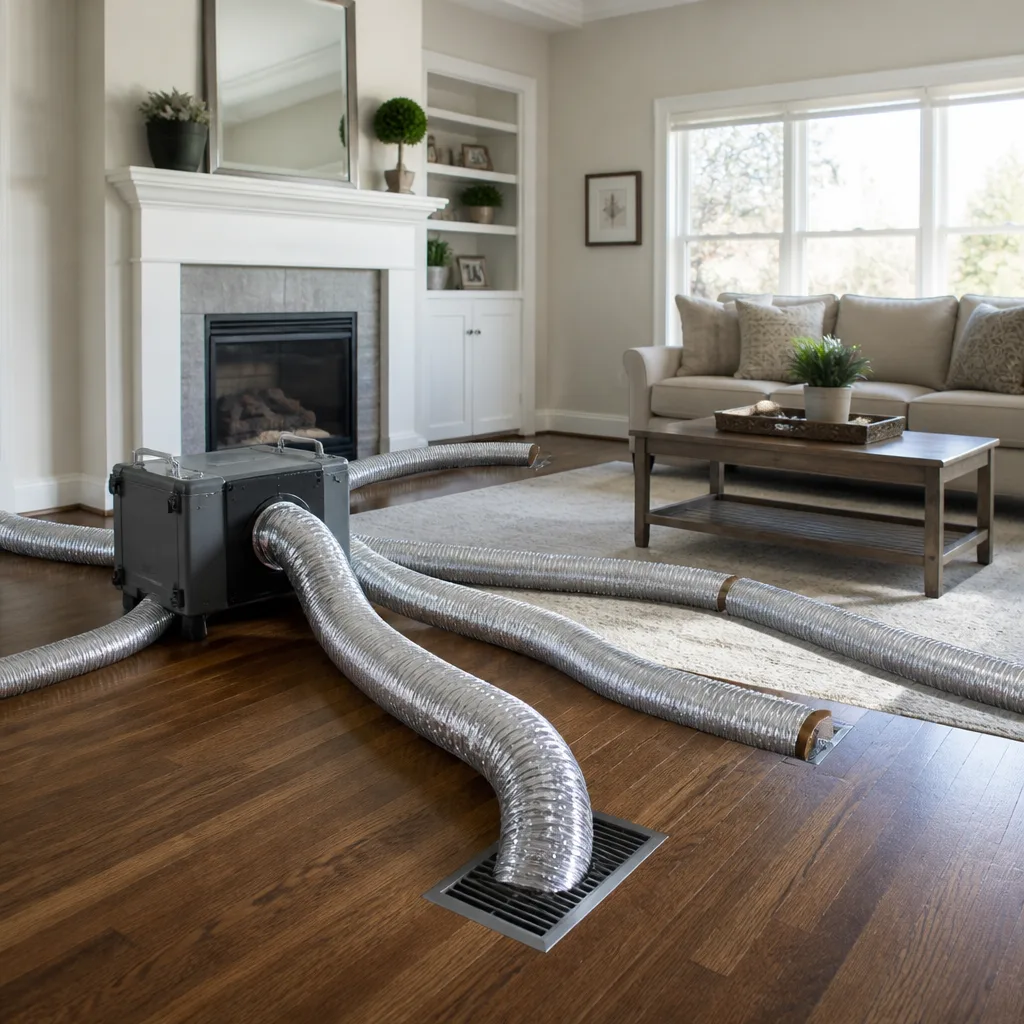 Whole-home duct cleaning
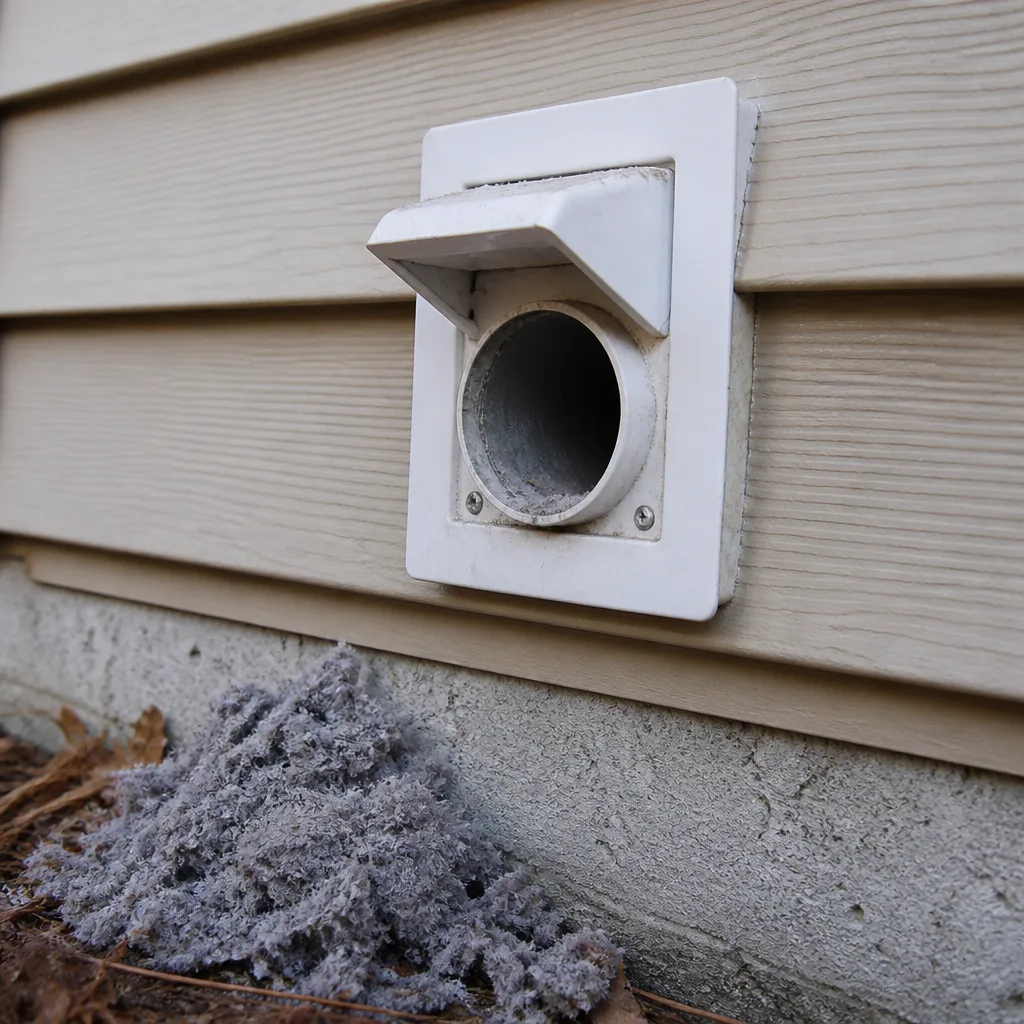 Dryer vent cleaning
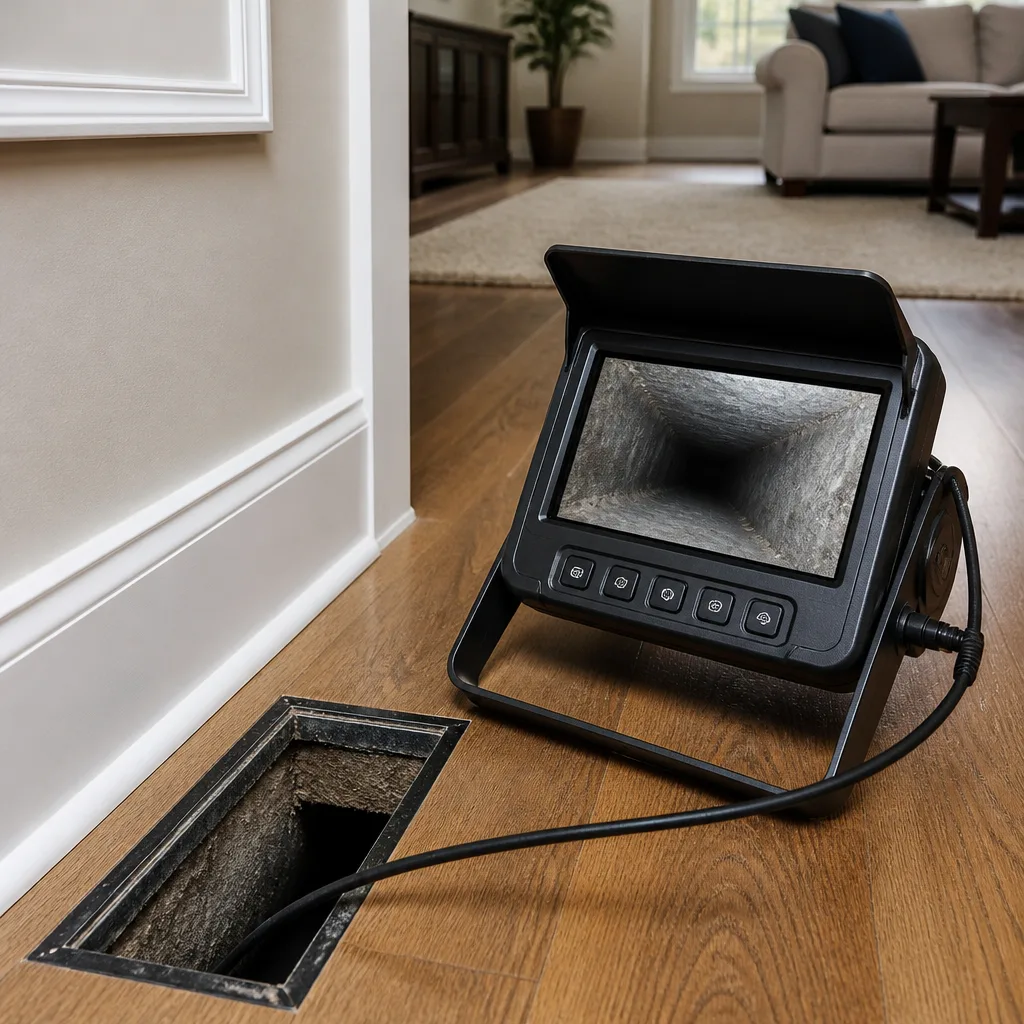 Camera inspection
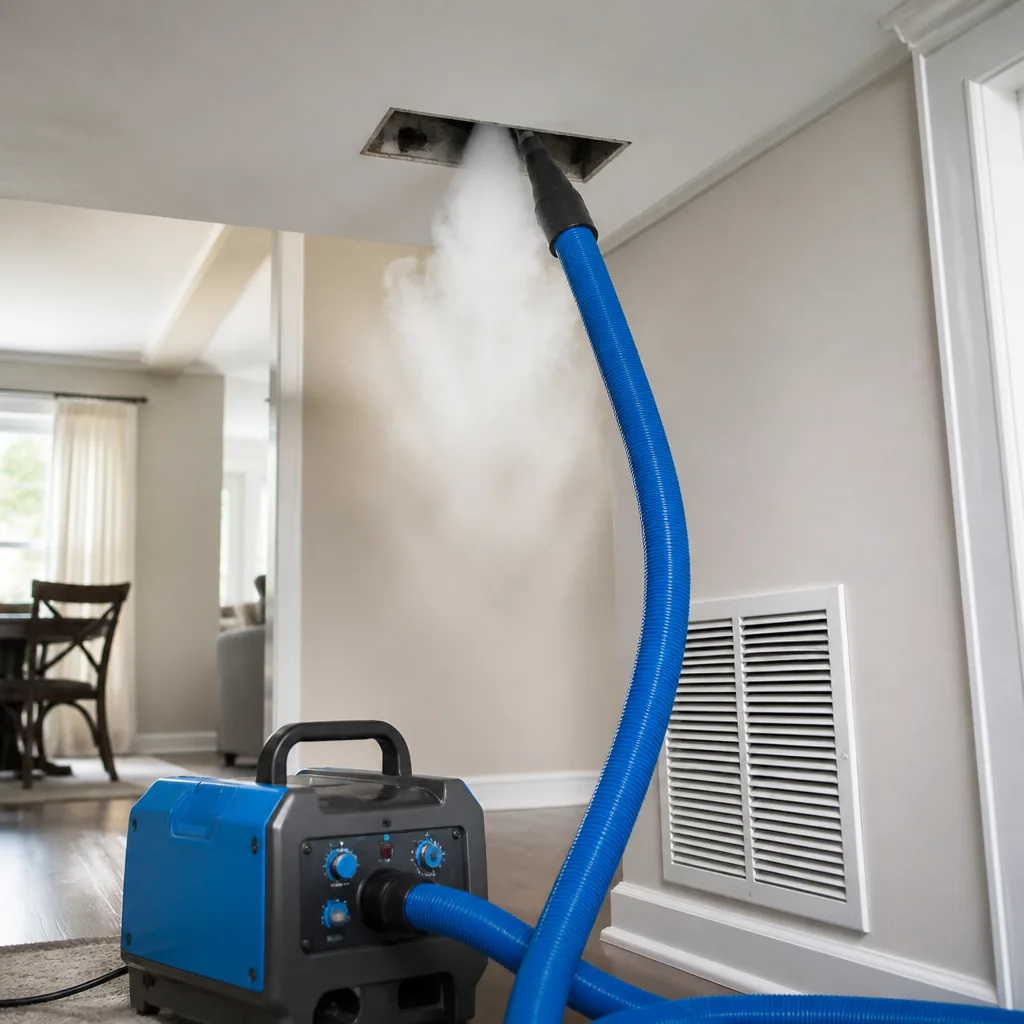 Sanitizing & deodorizing
Whole-system duct and dryer vent check with before-and-after photos - you see exactly what came out of your vents
That "$99 whole-house special" is a bait ad - the real number appears once they are in your hallway, or the "clean" is a shop-vac at the register. We photograph the inside of your ducts before and after instead.
Air Duct Cleaning Permits, Codes & Inspections in Knoxville, TN: What You Need to Know
No permit is needed to clean your ducts. But if the company that came to clean also patched a collapsed flex duct section, reconnected a disconnected trunk line, or installed new duct board in your crawl space without a permit, that’s unpermitted mechanical work under Tennessee’s State Mechanical Code. That distinction surprises a lot of Knoxville homeowners, and it matters more than most people realize at resale, at insurance claim time, and when a contractor tells you the cleaning “just turned into a repair” mid-job. This guide draws a clean line between maintenance and mechanical work, explains how Knox County handles mechanical permits, and shows you the contract language that keeps a routine cleaning from quietly becoming an unpermitted alteration.
Quick Answer
In Knoxville, routine air duct cleaning, sanitizing, and dryer vent cleaning are maintenance and do not require a permit. Duct repair or replacement, however, is mechanical work under the Tennessee State Mechanical Code and generally requires a permit through Knox County Codes Administration before work begins. A contractor’s internal camera inspection is not a code inspection; only Knox County can perform the latter. Ask for the permit paperwork separately, in writing, before any repair proceeds.
Styles & brands we work with
- Whole-home duct cleaning
- Dryer vent cleaning
- Camera inspection
- Sanitizing & deodorizing
Table of Contents
- Cleaning vs. repair: where the permit line falls
- What counts as a permit-required duct repair in Knoxville?
- How does Knox County handle mechanical permits and complaints?
- What do unpermitted duct repairs mean at resale and claim time?
- When do sanitizing agents require EPA registration and disclosure?
- What’s the difference between a contractor’s camera inspection and a code inspection?
- What contract language protects you when a repair is found during cleaning?
- How do Knoxville’s climate and housing stock affect duct work rules?
Cleaning vs. Repair: Where the Permit Line Falls
Cleaning is maintenance. Repair is mechanical work. That’s the whole line, and it’s the sentence to hold onto when you call around for estimates in Knoxville.
The State Mechanical Code regulates the installation, alteration, repair, and replacement of mechanical systems, including ductwork. What it does not regulate is cleaning the inside of a system that already functions. Removing accumulated dust, debris, and microbial contamination from ducts, plenums, and registers changes nothing about the system’s design, airflow, or structural connections. No permit. No inspection. This is the category air duct cleaning belongs in, and it’s what most Knoxville homes actually need.
Repair is different. A collapsed flex run, a disconnected trunk, new rigid duct board fabricated and installed, a return air drop that’s been re-routed because of a renovation – these change the mechanical system, and that’s what permits exist to track. Here’s the practical split:
- No permit: cleaning ducts, plenums, and registers; sanitizing after cleaning; sealing pinhole leaks with mastic; replacing a register grille; cleaning the air handler exterior; cleaning a dryer vent.
- Permit usually required: replacing a section of flex or rigid duct; reconnecting a disconnected trunk line to the main; installing new duct board; re-routing or adding supply or return runs; replacing an entire duct system.
- Grey zone: taping or sealing a joint during cleaning; re-hanging sagging duct with new strapping; capping an abandoned run. These depend on whether the work alters the system beyond restoring it to its original design.
When a Knoxville home is renovated and the HVAC layout shifts, that’s mechanical alteration. Cleaning is not. Ask yourself: is the contractor restoring the system to what it was, or changing it? If it’s the second, the paperwork question goes on the table before a single fitting comes loose.
What Counts as a Permit-Required Duct Repair in Knoxville?
Any alteration to the mechanical system – ducting included – triggers the permit question under the State Mechanical Code. Here are the concrete cases where you should expect to see a Knox County mechanical permit before work starts:
- Replacing a failed section of flex duct. A crushed or torn run that gets cut out and replaced is new duct material, and that’s a mechanical alteration.
- Reconnecting a disconnected trunk. If a trunk line has separated from the main or a supply boot has pulled loose, reconnection changes the system’s integrity and generally requires a permit.
- Installing new duct board. Fabricating new duct board in a crawl space or attic is an installation, not a cleaning.
- Rerouting or adding runs. Any new supply or return, or moving an existing one because of a renovation, is a change to the system layout.
- Replacing an entire duct system. Full replacement is mechanical installation from start to finish.
- Capping off an abandoned run. This can go either way depending on scope, but it’s worth asking the permitting office about if it involves more than restoring original design.
None of these cases involve the cleaning itself. What happens is that a technician opens a return and finds a failed fitting, a collapsed flex section, or a boot that’s pulled away from the drywall. That’s a fine and useful discovery. The problem is when a company quietly “fixes it while we’re here” and never mentions a permit. That’s the pattern to watch for in Knoxville.
Our own approach during HVAC cleaning is to document anything found and flag it in writing before proceeding. That’s not caution for its own sake – it’s the only way a homeowner can tell cleaning from unpermitted repair if a question ever comes up.
How Does Knox County Handle Mechanical Permits and Complaints?
Mechanical permits in Knoxville are issued by the Knox County Codes Administration. The office handles permitting for construction and alteration work, including HVAC work, and it inspects permitted work at defined stages. If a complaint is filed about unpermitted mechanical work, it routes through the county’s codes enforcement process, not through a private contractor.
Here’s how the process typically works when a mechanical permit is pulled for duct repair in Knoxville:
- Permit application. The permit applicant (usually the licensed contractor) files the mechanical permit with Knox County before work begins.
- Permit issued. Once the permit is issued, work can proceed lawfully.
- Rough-in inspection. Ductwork is inspected before it’s closed in or before the system is finished.
- Final inspection. A final mechanical inspection confirms the installation matches the permit scope.
The county inspects permitted work, not unpermitted work. It doesn’t knock on doors looking for cleaning jobs, and no one is going to inspect your ducts because they were cleaned. But if a neighbor, a buyer’s home inspector, or an insurance adjuster raises the question of unpermitted mechanical work, that question goes to the county, and the county’s records will show whether a permit was ever pulled.
If you’re not sure whether work needs a permit, call Knox County Codes Administration directly. It’s a short call, it costs nothing, and it settles the question faster than any contractor can. A licensed contractor will not be bothered by you asking; one who is bothered by the question is telling you something.
What Do Unpermitted Duct Repairs Mean at Resale and Claim Time?
Two words: disclosure and documentation. When a Knoxville home goes on the market, sellers are expected to disclose known alterations and unpermitted work. Duct repair that never had a permit is a known alteration, and its status becomes visible when the buyer’s home inspector looks at the HVAC system or when the buyer’s agent requests county records.
What actually happens varies. Sometimes it’s a paperwork headache cleaned up after closing. Sometimes the buyer asks for a permit to be pulled retroactively, which means inspection of work already finished and possibly closed in – which can mean opening finished drywall or crawl space insulation to show the work. And sometimes an unpermitted repair stalls a closing because the lender or buyer won’t waive it.
Insurance claims follow a similar logic. If a water loss involves ductwork (a condensate failure, for example) and the adjuster finds unpermitted mechanical alterations near the loss, the adjuster may question whether the alteration contributed or whether the policy language on unpermitted work applies. We’ve seen duct issues in Knoxville that were clearly the result of a repair done without a permit, years earlier, that only got surfaced when a claim was filed.
The fix is simple and cheap: keep the paperwork. If a duct repair is done on your Knoxville home, save the permit number, the inspection record, and the contractor’s invoice. If work is claimed as “no permit needed, it was just cleaning,” ask for that in writing and keep it. A folder of records turns a scary disclosure into a non-issue.
When Do Sanitizing Agents Require EPA Registration and Disclosure?
Any product applied inside an HVAC system that claims to control or kill microorganisms is a pesticide, and that means an EPA-registered product, applied according to its label, with disclosure to the homeowner. This isn’t optional; it’s federal. And it’s the part of the industry that gets glossed over the most.
What “EPA-registered” means in plain terms: the product has been reviewed by the EPA for its labeled use, and the label sets the conditions – concentration, contact time, surfaces it can be applied to, whether it’s for hard non-porous surfaces only or can go on porous duct liner. Applying an antimicrobial to duct liner when the label says “hard surfaces only” is a misuse of the product, even if the contractor means well.
If a Knoxville company offers to “sanitize” or “fog” your ducts, ask three things:
- What is the EPA registration number on the product label?
- What does the label say about application to duct interior and duct liner specifically?
- Will you write the product name, EPA registration number, and application conditions into the invoice?
We use Guardsman sanitizing as part of Knoxville Air Duct Cleaning Co services, and the honest way to describe any sanitizer is this: it treats contamination on surfaces it contacts. It doesn’t repair a duct system, it doesn’t replace mechanical cleaning, and it isn’t a substitute for fixing a moisture source. Cleaning comes first; sanitizing is applied after. If sanitizing is offered as a “premium add-on” without an explanation of what it treats, ask the questions above before you say yes.
What’s the Difference Between a Contractor’s Camera Inspection and a Code Inspection?
A contractor’s camera inspection is a diagnostic tool. A code inspection is a regulatory event. They serve entirely different purposes, and the confusion between them is a trap.
When a technician runs a camera through ductwork to see what’s inside, that’s an internal inspection: it tells the contractor and the homeowner where the dust is, where the breaks are, and whether the system has issues the visible surfaces don’t show. It’s useful. It’s also not an inspection in any official sense. No county employee is present, no report gets filed with anyone, and no permit is signed off.
A code inspection through Knox County Codes Administration is part of the permit process. It happens at defined stages – typically rough-in and final – and its job is to confirm that the mechanical work is done per code and per the permitted scope. The county inspector signs off, and that sign-off becomes part of the county’s records.
Here’s the checklist that keeps the two straight:
- Who performs it? Contractor for internal inspection; Knox County for code inspection.
- What does it check? Internal: cleaning condition, breaks, contamination. Code: compliance with the State Mechanical Code and the permit scope.
- Does it generate paperwork? Internal: a report for you. Code: a permit inspection record on file with the county.
- When does it happen? Internal: during service. Code: rough-in and final stages of permitted mechanical work.
If a company tells you their “inspection” will satisfy a permit requirement or a buyer’s request at closing in Knoxville, ask specifically: who performs the inspection and where does the record go? The answer should name the county. Anything else is a camera and a sales pitch.
What Contract Language Protects You When a Repair Is Found During Cleaning?
Write the separation into the contract before the work begins. Cleaning is one scope, repair is a separate scope with its own paperwork, its own price, and – where the State Mechanical Code applies – its own permit. If your contract does not say this, ask for it. A contractor worth hiring will agree without drama.
Here’s the language we recommend Knoxville homeowners require in writing:
- Scope statement: “Cleaning scope is limited to removal of debris and contamination from existing ductwork, plenums, and registers. No alterations, repairs, or installation of duct materials will be performed under this cleaning scope.”
- Discovery clause: “If any duct defect is identified during cleaning, it will be documented with photos and a written description. No repair will proceed until the homeowner authorizes it in writing as a separate scope.”
- Permit responsibility: “Contractor will advise in writing whether the proposed repair requires a permit through Knox County Codes Administration. If a permit is required, the permit will be obtained before repair work begins, and the permit number and inspection record will be provided to the homeowner.”
- Sanitizing disclosure: “Any antimicrobial product applied inside the HVAC system will be identified by product name and EPA registration number, applied per its label, and documented on the invoice.”
- Photo documentation: “Before-and-after photos of the duct system will be provided to the homeowner.”
That’s it. Four or five lines in the contract and the whole unpermitted-repair scenario becomes a lot harder. The pattern to avoid is the mid-job conversation: “we found a collapsed duct, it’s going to be $X, want us to fix it while we’re here?” That is the moment where a cleaning job turns into an unpermitted mechanical alteration, and it happens because the contract didn’t foreclose it.
How Do Knoxville’s Climate and Housing Stock Affect Duct Work Rules?
Knoxville’s humidity is the local variable most likely to push a cleaning job toward a repair job. In the Tennessee Valley, summer dew points routinely sit in the upper 60s and low 70s, and a duct system running through an uninsulated crawl space or a vented attic can develop condensation on cool surfaces. That moisture, over years, weakens flex duct connections and softens duct board. Cleaning often surfaces the failure because cleaning is the first time anything has been opened and looked at.
Housing stock plays a role too. Knoxville’s older neighborhoods – Fourth and Gill, Old North Knoxville, Mechanicsville, Sequoyah Hills – have a lot of homes with duct systems that have been altered over multiple HVAC replacements. A system built for a 1970s air handler then retrofitted for a modern one often has connector runs and transitions that were improvised at the time of the replacement. Those are exactly the spots where a cleaning technician will find a defect.
What to expect in Knoxville specifically:
- Crawl space duct systems in Knoxville’s older neighborhoods are the most common site of failed duct connections and unpermitted past repairs.
- Attic systems in newer builds – Farragut, Hardin Valley, the Cedar Bluff area – tend to have flex duct with long runs that are more susceptible to crushing and disconnection.
- Basement and utility closets in homes near downtown Knoxville are where older rigid duct is often replaced with flex during HVAC upgrades, which is mechanical work, and which should have a permit if done properly.
- Humidity-driven issues – condensation on cool duct surfaces, moisture intrusion in crawl spaces – are the top reason a Knoxville cleaning finds something that turns into a repair conversation.
None of those observations change the permit line. They just raise the odds that a Knoxville homeowner will hear the “we found something” conversation during a cleaning. That’s why the contract and documentation matter more here than in a dry climate. Ask for photos, ask for the scope, ask for a permit if repair is proposed. Dryer vent cleaning is a separate service with its own considerations, but the same principle applies: get the paperwork separated from the diagnosis.
Common Mistakes to Avoid
- Letting a contractor “just fix it while we’re here.” Cleaning is one scope; a duct repair is mechanical work. If it isn’t separated in writing with its own price and – where required – its own permit, you’ve lost the trail.
- Assuming the cleaning company has a license to do mechanical work. Cleaning and mechanical repair are licensed differently in Tennessee, and a cleaning technician may not be authorized to perform the repair they’re proposing. Ask which scope the company holds a license for.
- Confusing a camera inspection with a code inspection. If a Knoxville buyer’s agent asks for an inspection record at closing, a camera report and a photo of the inside of a duct won’t satisfy them. The record has to come from Knox County.
- Not asking about the sanitizing product. Any antimicrobial used inside an HVAC system should have an EPA registration number and be applied per its label. If the contractor can’t show you both, treat the sanitizing as unserious.
- Skipping the discovery clause in the contract. Knoxville’s older crawl-space duct systems surface defects during cleaning more often than not. Without a written discovery clause, “we’ll take a look” becomes “we already fixed it, here’s the bill.”
- Forgetting to keep records. A permit number and inspection record are worth more than any warranty promise. A folder with the permit, the invoice, and the photo documentation turns a scary disclosure at resale into a non-issue.
- Fearing a permit when it’s the easier path. A permit for duct repair is cheap and fast compared to the alternative. Unpermitted duct repair is what creates problems, not permitted duct repair.
See the difference
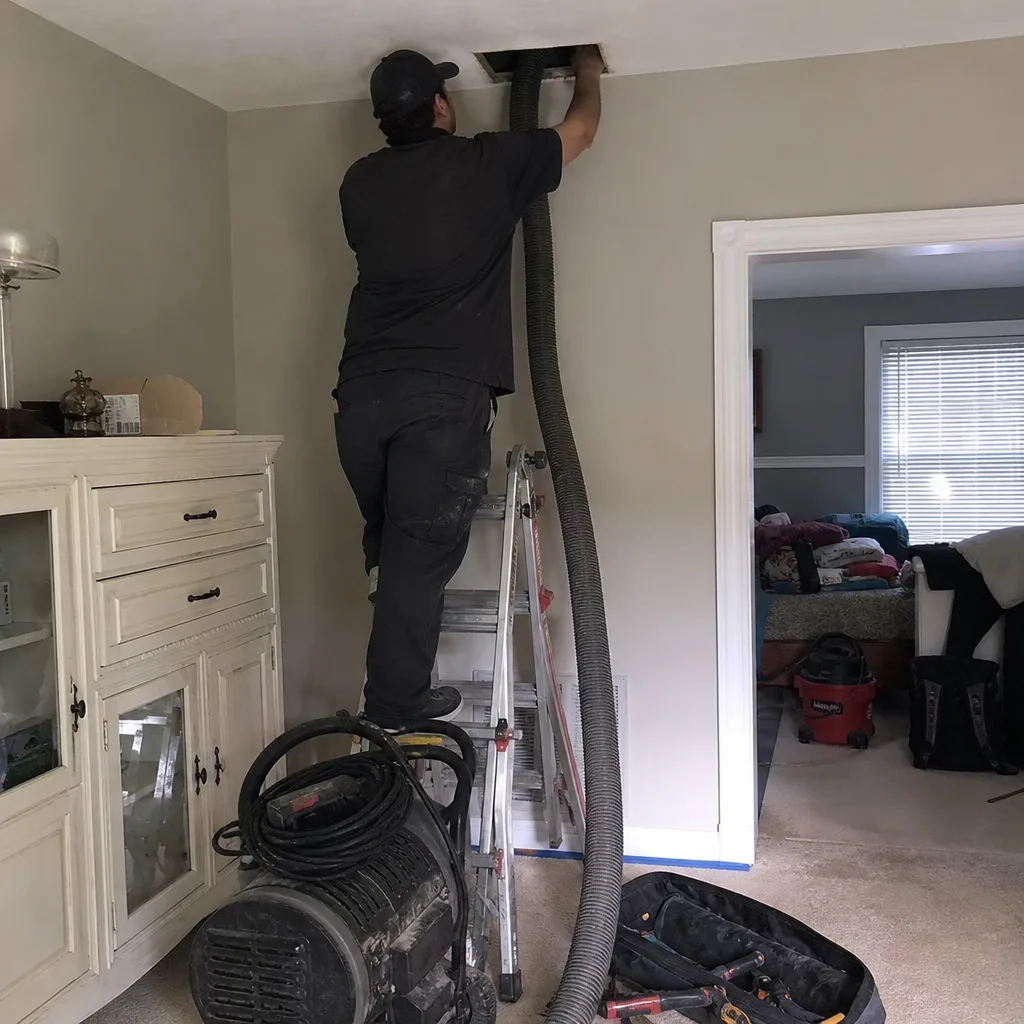 Before
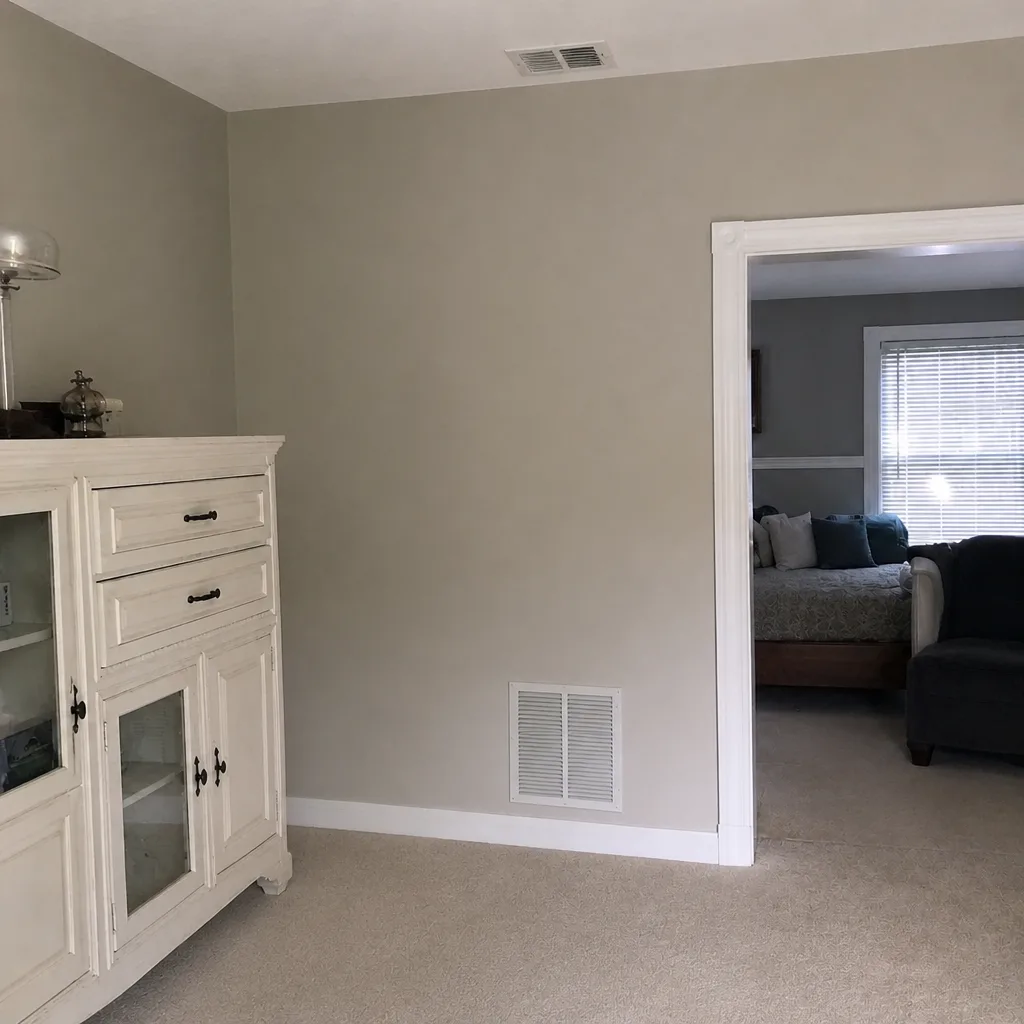 After
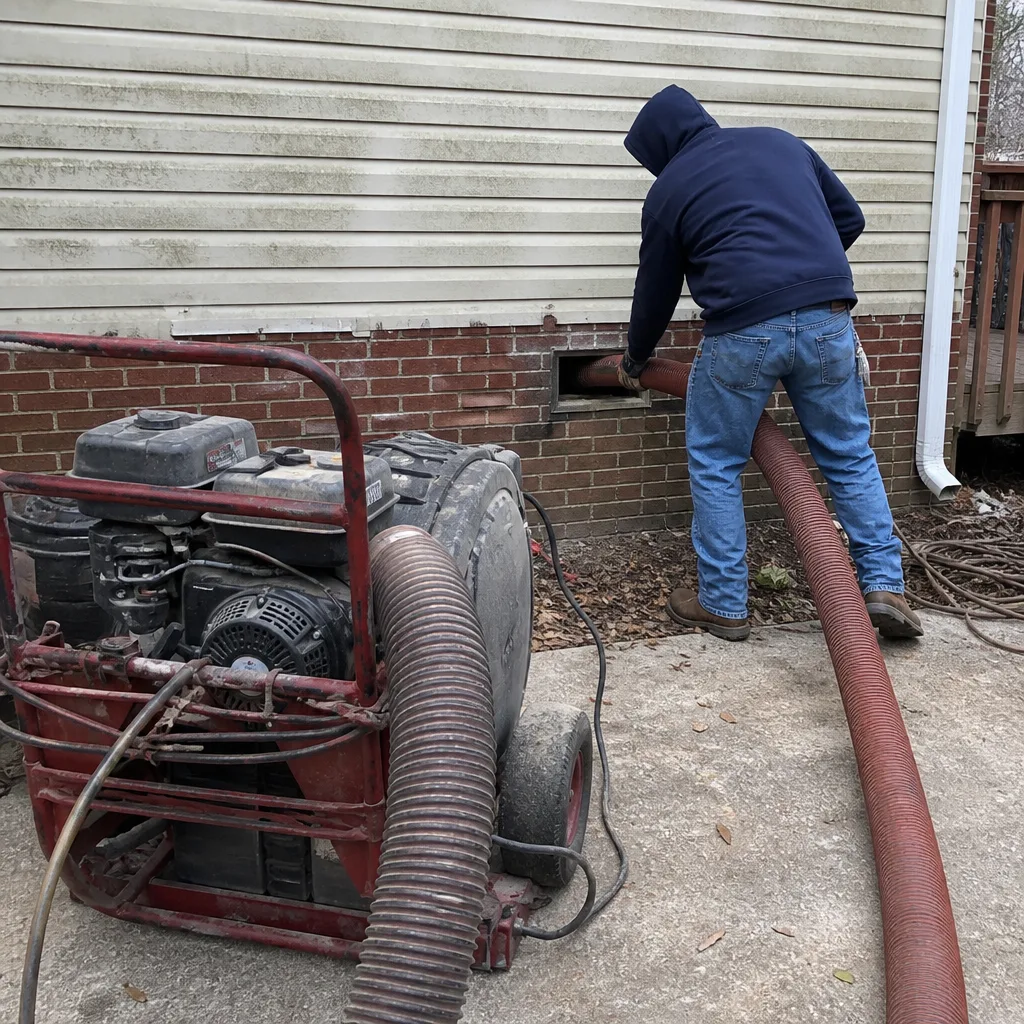 Before
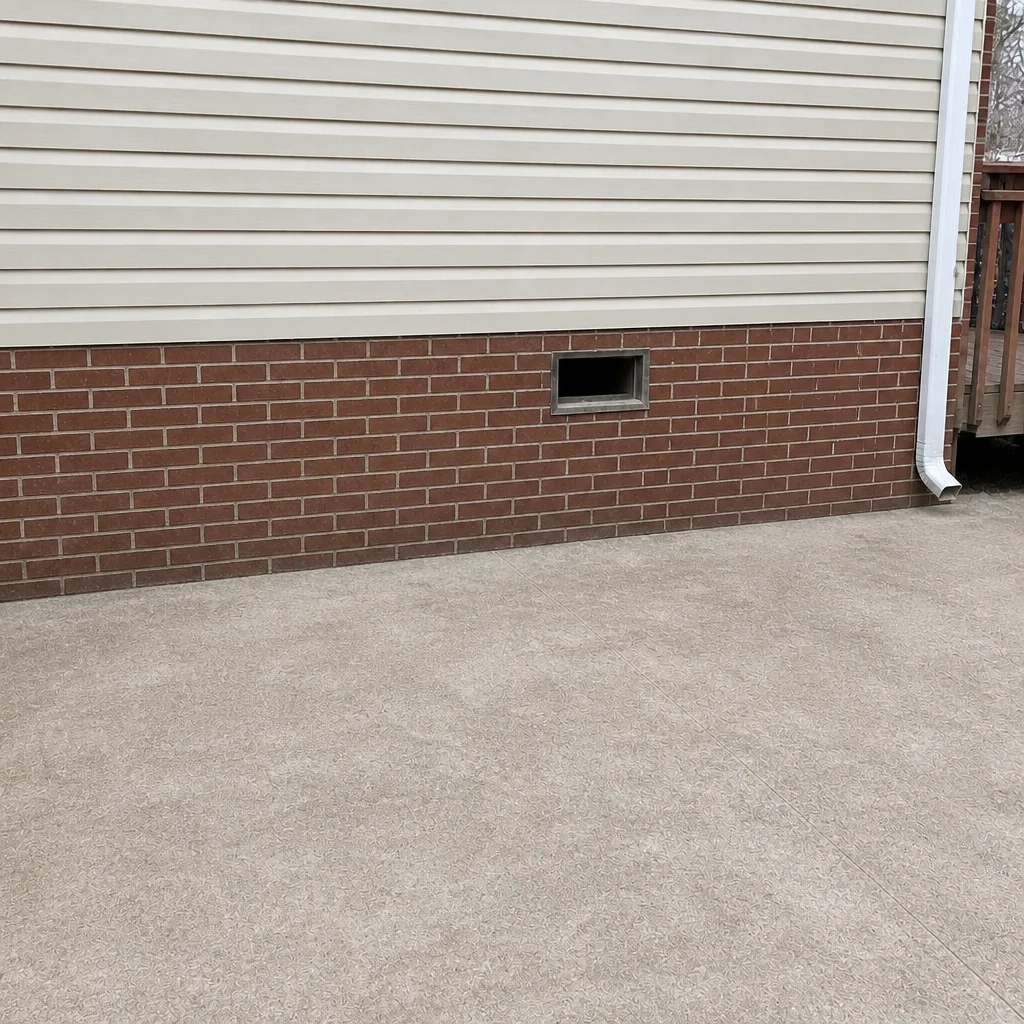 After
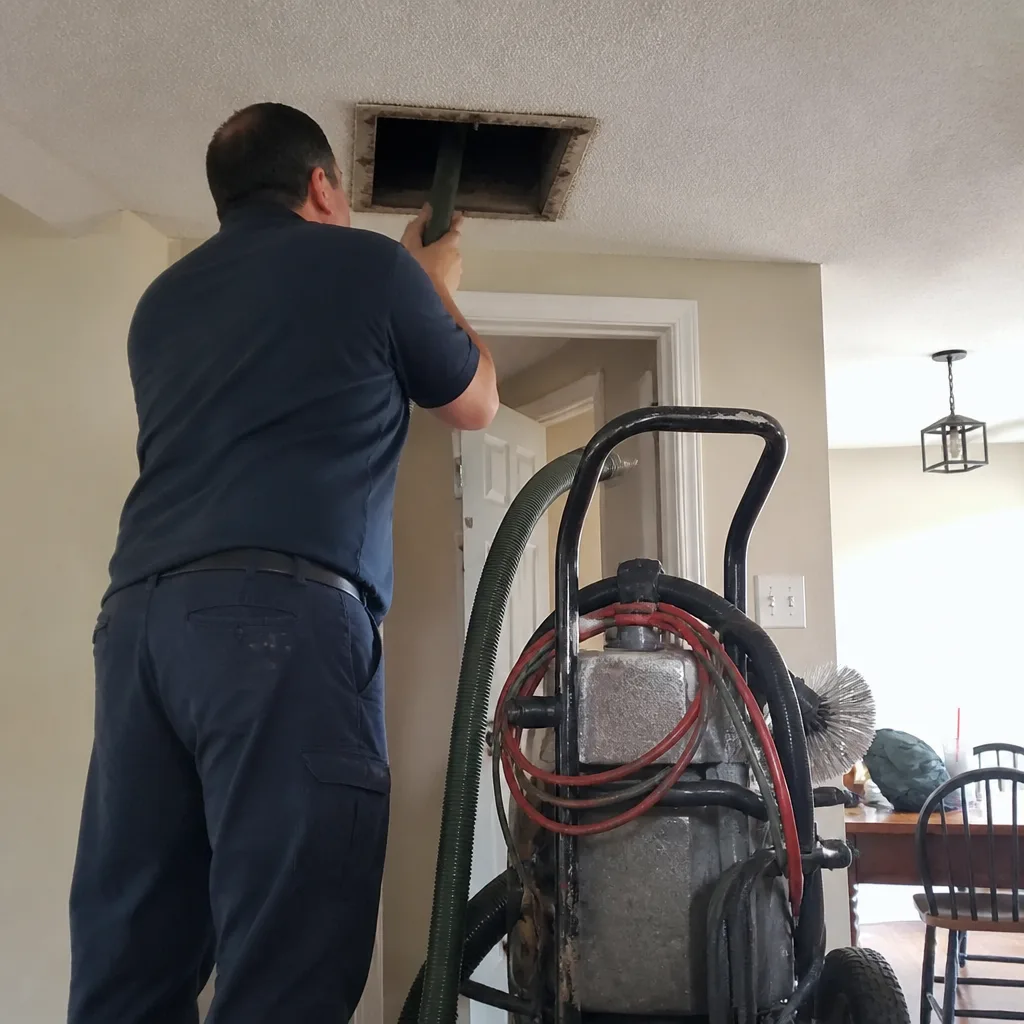 Before
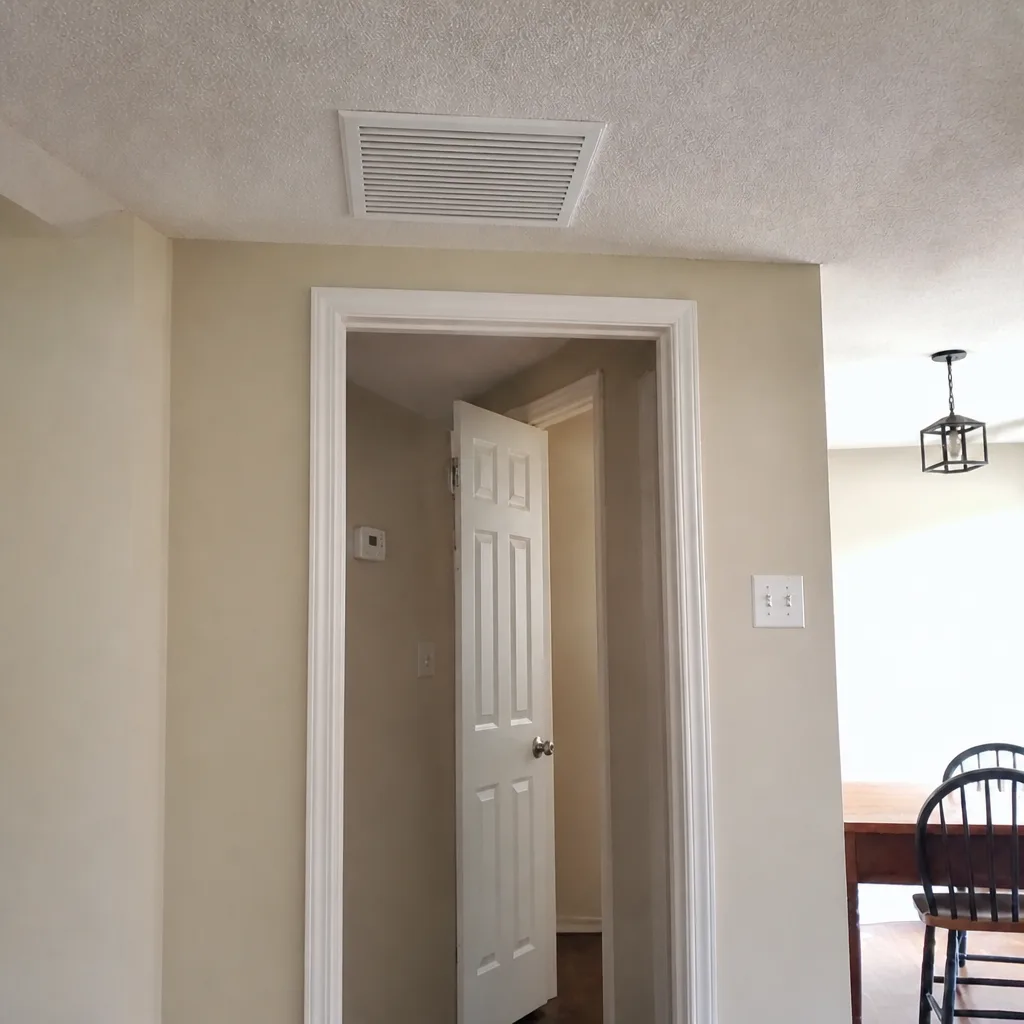 After
When to Call a Professional
Call a professional when you smell a persistent musty odor you can’t trace, when a room won’t heat or cool like the rest of the house, when visible dust blows out of a register right after cleaning, or after a renovation that left debris in the air handling area. Call when you see a duct pulled apart, sagging, or crushed. And call when a cleaning company tells you they’ve found a repair, because that’s the moment the paperwork question matters most.
Knoxville Air Duct Cleaning Co offers free estimates in Knoxville, with one flat price per system agreed before work starts, before-and-after photos of your own ducts, and a full-system scope that covers cleaning, sealing, and repair as separate, documented work. Our technicians have up to 10 years of experience, and we use professional-grade equipment from Rotobrush, Nikro, and Abatement Technologies – not shop-vac shortcuts. Call (888) 881-9239 for a free estimate.
Frequently Asked Questions
No. Routine air duct cleaning is maintenance under Tennessee’s State Mechanical Code and does not require a permit from Knox County Codes Administration. A permit is only needed when the work alters the mechanical system – duct repair, replacement, rerouting, or new installation. Call (888) 881-9239 for a free estimate on the cleaning scope.
Yes, usually. Duct repair that involves replacing duct material, reconnecting a disconnected trunk, rerouting runs, or installing new duct board falls under the State Mechanical Code and generally requires a mechanical permit through Knox County Codes Administration before work begins. Ask for the permit number before any repair proceeds. Call (888) 881-9239 to have the scope separated from a cleaning job in writing.
Unpermitted duct repair is a code violation, and its consequences show up later – at resale when a buyer’s inspector or agent requests county records, at insurance claim time when an adjuster reviews the mechanical history of the system, or when the work is discovered during a future service. Keep the paperwork on permitted repair and ask for the paperwork you don’t have. Call (888) 881-9239 for an estimate on evaluation and documentation of a duct system.
Any antimicrobial product applied inside an HVAC system is a pesticide and needs an EPA-registered product, applied according to its label, with the product name and EPA registration number disclosed to you. This is federal, not local, but Knoxville companies vary in how well they follow it. Ask for the EPA registration number in writing before you agree to sanitizing. Call (888) 881-9239 for a free estimate.
Rates vary by system size and condition, so treat any advertised teaser price with suspicion rather than as a starting point. What matters more than the headline number is whether the quote is per system or per vent, and whether duct repair found during cleaning is quoted as a separate scope with its own paperwork. A written estimate with one flat price per system, plus before-and-after photos, is the standard worth insisting on. Call (888) 881-9239 for an exact quote – estimates are free.
A very low quote often reflects a stripped-down scope: partial cleaning, no documentation, no separation between cleaning and mechanical work, and no clarity on what happens if a repair is needed mid-job. That’s how the bait-and-switch pattern starts – a low price becomes a much larger invoice once the “repair” conversation begins on-site. Ask for a written, per-system estimate before the visit and see how the low quote reads. Call (888) 881-9239 for a free estimate.
The Bottom Line
Cleaning your ducts in Knoxville is maintenance and doesn’t need a permit. Repairing, replacing, or rerouting ductwork is mechanical work under the Tennessee State Mechanical Code and generally does, through Knox County Codes Administration. Sanitizing products need EPA registration and disclosure. A camera inspection isn’t a code inspection, and the most valuable protection a homeowner can carry is the separation of scopes in the contract – cleaning on one side, repair on the other, with a written discovery clause and a permit number if repair is needed. Keep every record. It costs nothing and it pays at resale and claim time.
Written by the team at Knoxville Air Duct Cleaning Co.