
Last updated November 25, 2026
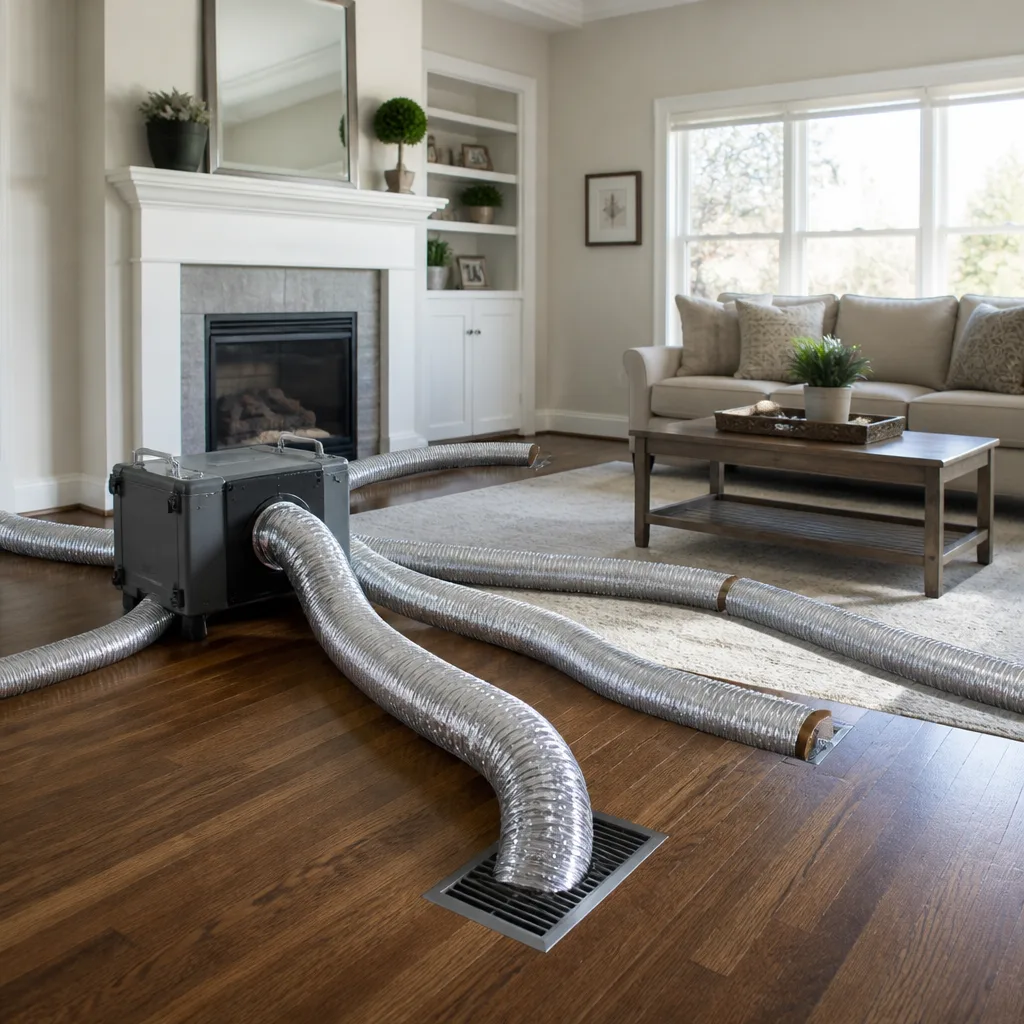 Whole-home duct cleaning
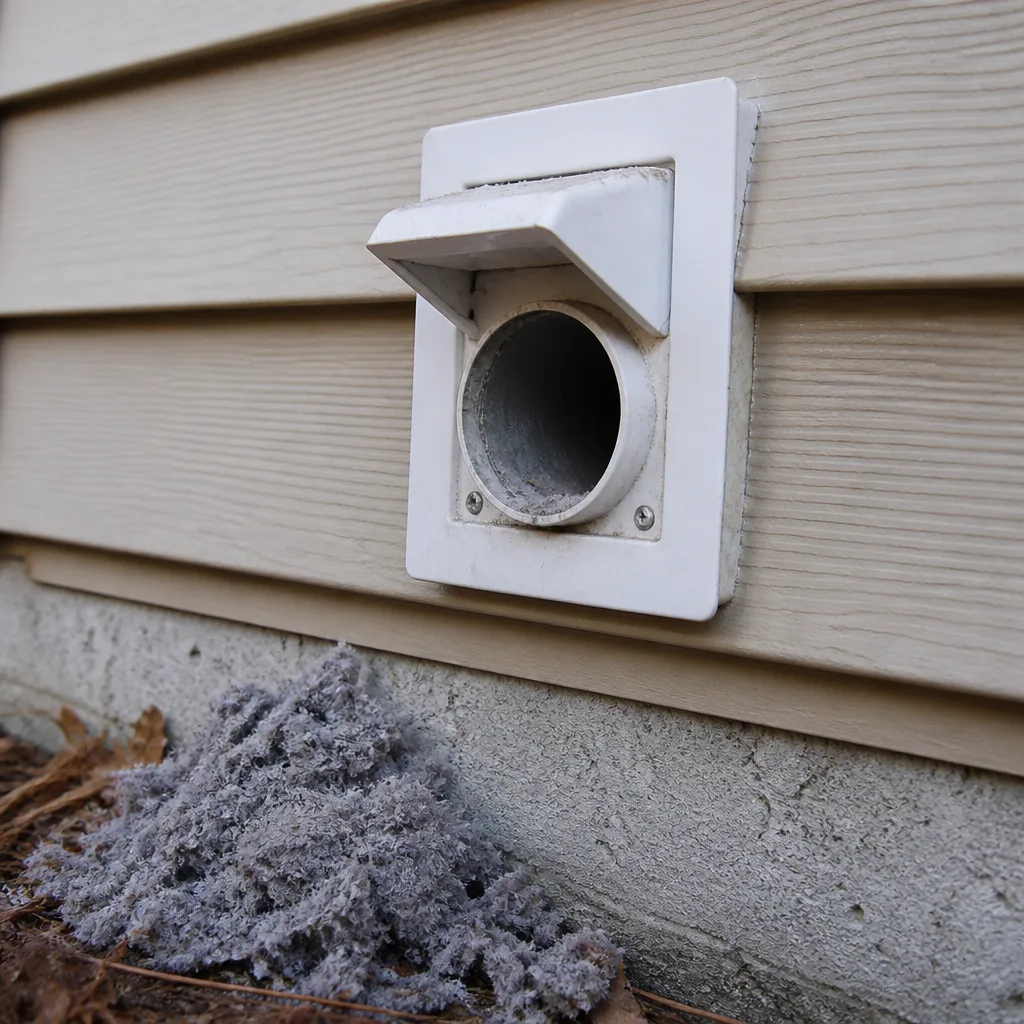 Dryer vent cleaning
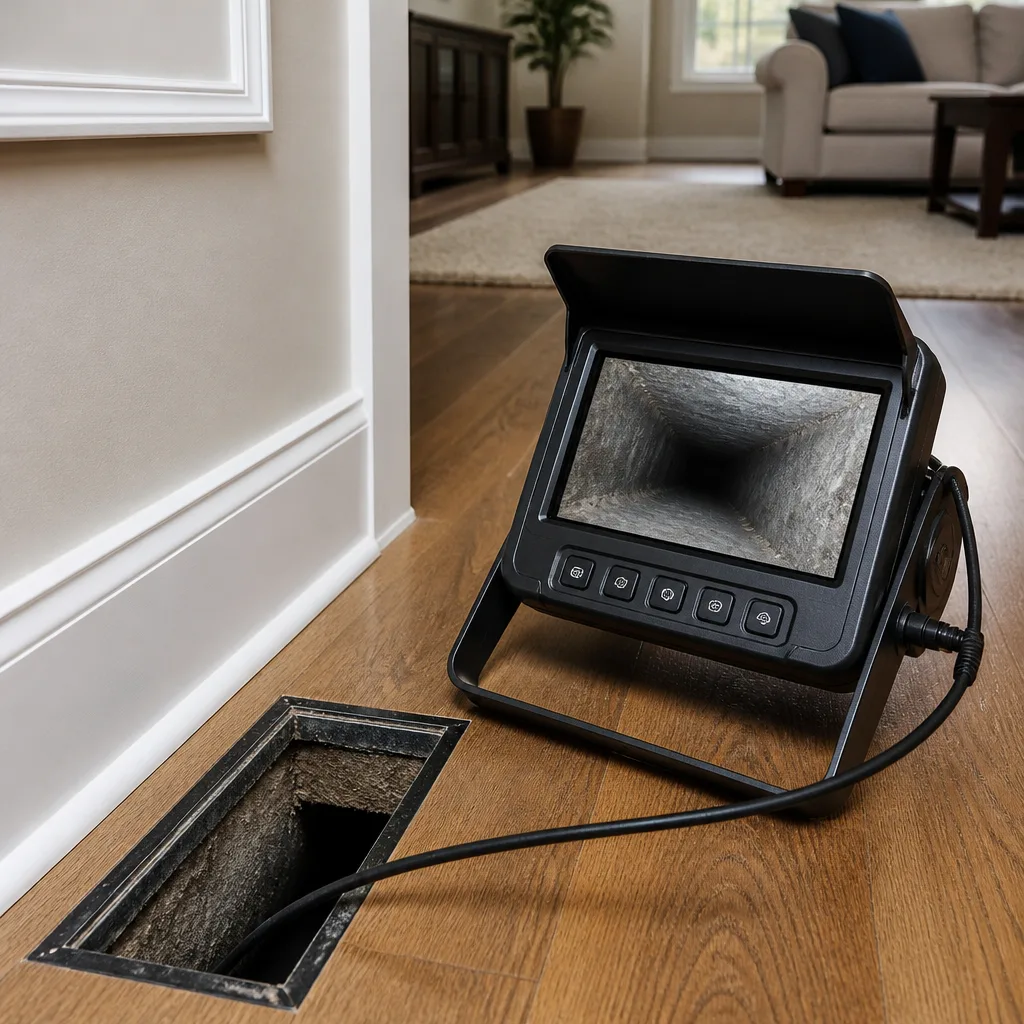 Camera inspection
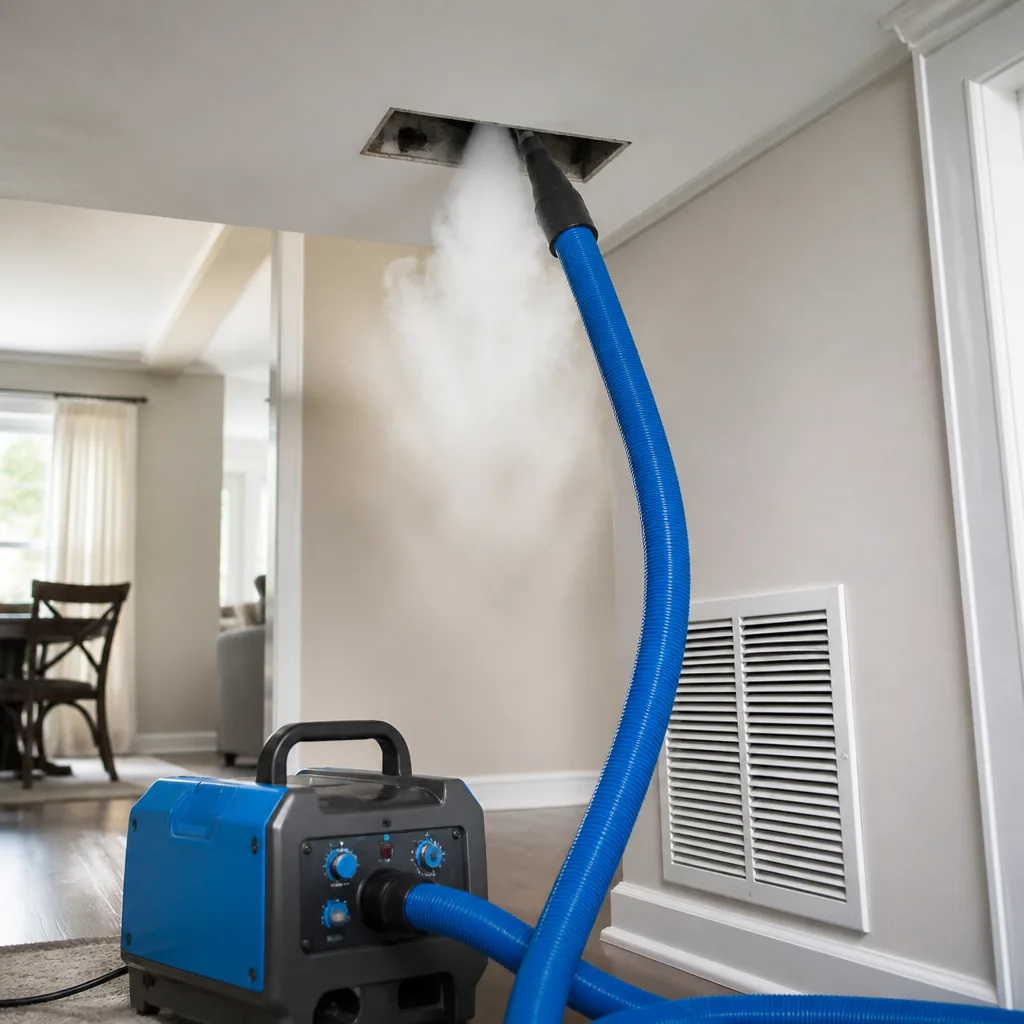 Sanitizing & deodorizing
Whole-system duct and dryer vent check with before-and-after photos - you see exactly what came out of your vents
That "$99 whole-house special" is a bait ad - the real number appears once they are in your hallway, or the "clean" is a shop-vac at the register. We photograph the inside of your ducts before and after instead.
Air Duct Cleaning Emergency Preparedness Guide for Knoxville Homes
Here’s the counterintuitive part: after a crawl space flood, most people call a water remediation company and then restart the HVAC to “dry things out.” That’s the move that turns a wet crawl space into a whole-house contamination event. A running system pulls moist, contaminated air through the return ducts and delivers it to every room in the house, and the duct surfaces stay damp afterward. The duct system is both the problem and the accelerant if you don’t know the shutdown protocol. This guide covers exactly what to do with your HVAC in the first 24 hours after a flood, a storm outage, or a wildfire smoke event in Knoxville.
Quick Answer
After a flood, storm, or heavy smoke event in Knoxville, shut the HVAC system off at the thermostat and the breaker before you do anything else, photograph the condition of the ducts and equipment, and don’t restart the system until the ductwork has been inspected and dried. Smoke events need professional cleaning of duct surfaces and filters, not just a filter swap. Call (888) 881-9239 for a free estimate once you’ve documented what happened. We answer 24/7.
Styles & brands we work with
- Whole-home duct cleaning
- Dryer vent cleaning
- Camera inspection
- Sanitizing & deodorizing
Table of Contents
- Post-Flood Protocol: The First 24 Hours
- How to Tell If Your Return Ducts Took on Water
- Wildfire Smoke Events and Duct Contamination
- Storm Debris and Power Restoration: Why Restart Timing Matters
- Building a Home HVAC Emergency Card
- Insurance Documentation for Air Quality Claims
- What a Post-Event Duct Cleaning Should Include
- Common Mistakes to Avoid
- When to Call a Professional
Post-Flood Protocol: The First 24 Hours
Flooding in Knoxville arrives in several shapes. Creeks like Second Creek and Ten Mile Creek swell after heavy rain events, low-lying neighborhoods near the Tennessee River see sheet flooding, and crawl space water intrusion happens even when no creek is involved. What follows is the sequence that protects your duct system and your family’s air. The first hour matters more than the first week.
Step one is shutdown, and it happens before anything else:
- Turn the thermostat to OFF. Not fan-only. Fully off. On a modern thermostat, that means the mode is set to OFF, not just the set temperature lowered.
- Cut power to the air handler at the breaker. A wet blower motor that starts unexpectedly can trip the breaker or, worse, run while wet. Label the breaker location while you’re standing at the panel so you don’t have to search for it under pressure.
- Shut the outdoor condenser at its disconnect. That’s the small pull-out block or switch box near the outdoor unit.
- Photograph before you move anything. Wide shots of the crawl space or mechanical closet, close-ups of duct connections, waterlines on the equipment, and any visible debris on grilles. Timestamped photos are the difference between a smooth insurance conversation and a fight.
- Keep the system off until the ductwork is inspected. Not until the floors are dry. Until a technician has confirmed the ducts themselves are dry and clean.
- Document the water level. A line on the duct or air handler shows how high water reached. Write down the date and time you measured it.
We’ve built this sequence because the most common mistake in Knoxville crawl space floods is restarting the system too soon. A system that runs while the ducts are wet distributes moisture to insulation and drywall and turns a localized problem into an air quality problem throughout the house.
How to Tell If Your Return Ducts Took on Water
Return ducts are the ducts that pull air back to the air handler. In most Knoxville homes, they run through the crawl space or mechanical closet, which makes them the first part of the system to take on water. Knowing whether they’re compromised determines whether a cleaning is enough or a duct repair and sealing job comes first.
Look for these signs:
- Water staining or tide lines on the duct jacket, especially on the lowest run near the air handler.
- Sagging or soft spots in flexible duct runs. Wet flex duct loses its shape and its insulation value.
- A musty or earthy smell coming from supply registers when the system runs. Musty smell near the ducts after a flood is a signal of moisture and microbial growth, not just stale air.
- Visible standing water in the mechanical closet or the immediate area around the air handler.
- Condensation on the outside of the duct jacket during the first days after the flood, which points to a humid air pocket inside the crawl space rather than the ducts themselves.
- Loose or disconnected joints where the duct meets the air handler or a register boot. Water intrusion often loosens connections.
If any of those signs are present, don’t run the system. The remediation sequence is different. A technician should inspect the return side first, check for standing water around the mechanical equipment, and determine whether the ducts can be dried and sealed or need replacement sections. In homes near the Tennessee River and in older neighborhoods with original flexible runs, that inspection is often more involved than homeowners expect.
Once the ducts are confirmed dry, the next step is a full-system visit covering air duct cleaning of both the supply and return sides. Cleaning a duct system that’s still damp just spreads moisture around.
Wildfire Smoke Events and Duct Contamination
Smoke events reach Knoxville when wildfire plumes from surrounding regions drift in, and they push a different kind of contamination into a home than ordinary household dust. The distinction matters because the cleaning that handles dust isn’t the same as the cleaning that handles smoke residue.
What’s different about smoke:
- Fine particulate sits on duct surfaces, not just in the filter. Household dust is heavy and settles; fine smoke particulate stays airborne longer and deposits on duct walls and register faces.
- Smoke odor travels through the system on the return side. Even after the outdoor air clears, the smell can re-circulate for weeks.
- HEPA and media filters load differently. A filter that was fine before a smoke event can be saturated within days. The filter change is necessary but not sufficient, because it doesn’t clean the ducts themselves.
- Pressurization matters. Homes with older duct systems and loose joints draw outdoor smoke in through the duct envelope. That’s why duct repair and sealing closes the loop after cleaning.
A proper post-smoke cleaning is not just a vacuum pass. It includes mechanical cleaning of the full air pathway with professional equipment, high-efficiency air containment during the job, and a filter replacement appropriate to the load. When the smoke event was long or the indoor air quality problem is significant, sanitizing with a Guardsman treatment after mechanical cleaning addresses residue on duct surfaces that the vacuum can’t fully remove. A Honeywell or Aprilaire filtration upgrade afterward is a natural next step for homeowners who want the next smoke event to be milder.
The key point for Knoxville residents: if you had a smoke event and your home still smells like smoke long after the outdoor air has cleared, the residue is in the duct system and a standard service call won’t fix it. It needs a proper cleaning and a look at the duct envelope.
Storm Debris and Power Restoration: Why Restart Timing Matters
Prolonged power outages are part of living in Knoxville, and they create a specific hazard that most homeowners don’t think about. While the system is off, air in the ducts is still. That’s when debris settles. Dust, insulation fragments, and sometimes pest activity accumulate on duct surfaces, and the first 30 seconds of the system running afterward is the moment that debris moves.
Why running the system immediately after an outage matters:
- Debris that settled during the outage gets pulled into the air stream and distributed through every supply register.
- Infiltration during the outage (loose joints, disconnected runs, unsealed penetrations) can introduce debris and moisture that weren’t there before.
- Humidity inside the ducts during the outage can create conditions where microbial growth starts before the system ever runs.
- Pest intrusion into ducts is more common during long outages because the duct system is quiet. That’s a cleanup problem, not just a cleaning problem.
The right sequence after a storm outage in Knoxville:
- Walk the mechanical space before restoring power to the HVAC. Look for water, pest signs, and anything that fell onto the equipment.
- Inspect the filter and replace it if it looks loaded or damp.
- Run the system in fan-only mode briefly if everything looks dry. Listen for unusual sounds and check the airflow at registers.
- If the airflow is weak or the supply air smells off, shut the system off and call for a full-system inspection before running it further.
If the outage was long and the ducts are older, a scheduled HVAC cleaning after the storm is worth considering. That sequence, clean it, seal it, improve it, prevents the next outage from starting the same way.
Building a Home HVAC Emergency Card
An HVAC emergency card is a single piece of paper you keep where you’ll actually find it under pressure: on the inside of the mechanical closet door, in the front of the homeowner binder, and photographed on your phone. It exists because during a flood or storm you won’t remember the right steps, and the people in the house with you won’t either. The card solves that.
What goes on the card:
- Breaker location and label. Which breaker at the main panel feeds the air handler, and where the panel is. If your panel isn’t labeled clearly, trace the breaker while the system is running and label it now.
- Thermostat shutdown steps. One line: “Set thermostat to OFF, then flip air handler breaker.” The card should be readable by a teenager.
- Outdoor condenser disconnect location. Where the pull-out block is, and how to pull it.
- Duct access points. Where the return plenum connects, where the air handler sits, and where the duct runs. A quick sketch helps.
- HVAC model and serial numbers. Photograph the plate on the air handler and the outdoor unit. Tape a copy to the card.
- Filter size and MERV rating. So the right replacement is easy to buy during a smoke event when stores are busy.
- Contractor contact. Knoxville Air Duct Cleaning Co at (888) 881-9239, plus your HVAC service company, your insurance agent, and a water remediation company.
Building the card takes about 20 minutes. Do it on a dry afternoon, not the day after a storm. If the card isn’t ready when the event arrives, the same content lives on the first page of Knoxville Air Duct Cleaning Co‘s site and can be read on a phone in the dark.
Insurance Documentation for Air Quality Claims
Insurance claims for air quality remediation after a storm or flood event are documentation contests. The insurer’s job is to establish scope and cost, and your job is to make the scope obvious. Photos taken before anything is moved and a written report from a contractor carry far more weight than a description of what happened.
What to gather before you call a contractor or your insurer:
- Timestamped photos of the waterline, the affected ducts, the mechanical equipment, and each affected register.
- Video walkthrough of the mechanical space from entry to air handler, with narration of what you see.
- A writing sample of the smell. A note describing the odor (“musty”, “earth”, “smoke”) in your own words, dated.
- Duct access notes. Where the ducts run and which parts of the run were affected.
- Airflow readings. A contractor’s report should include airflow measurements at registers before and after the event, which is one reason to have a baseline reading in the HVAC emergency card.
- A contractor report. A written scope that documents what was found, what needs cleaning or replacement, and what the cleaning process would include. Photos of the before-and-after of your own ducts belong in this report.
- Filter condition. Photograph the filter before replacing it. Insurance documentation for air quality remediation often turns on whether the filter was saturated.
The report is the part a homeowner can’t produce alone. Ask any contractor you call for a written summary you can hand to your insurer, with photos. We provide before-and-after photos of your own ductwork as part of our standard reporting.
What a Post-Event Duct Cleaning Should Include
Cleaning after a flood, storm, or smoke event is different from routine maintenance. The standard has to match the event. Here’s the scope that does the job.
- Professional-grade equipment, not shop-vac shortcuts. Rotobrush and Nikro equipment is the standard used by remediation contractors, and it’s what a post-flood cleaning needs. Machine-driver agitation against duct walls is what lifts smoke particulate and flood residue.
- Containment and high-efficiency air filtration on-site. Abatement Technologies filtration equipment keeps the dislodged material out of the rest of the house during the cleaning. That’s the difference between cleaning and redistributing.
- Full air pathway, not just supply ducts. Return side, supply side, register boots, and HVAC components. Cleaning only one side leaves the contaminant source behind.
- Duct repair and sealing where the system is broken. Cleaning is only as effective as the duct system is intact. Post-event is often when the leaks show up.
- Sanitizing where contamination calls for it. Guardsman treatment after mechanical cleaning addresses microbial concerns and odor residue that the vacuum can’t fully remove.
- Air quality improvements after the cleaning. Aprilaire or Honeywell whole-home filtration is the natural next step for homes that took on a heavy smoke load or that want better protection before the next event.
If you’re hiring a company whose duct cleaning job is “vacuum the supply side,” that’s not the scope this event needs. The written estimate should list the steps above so you can compare against other quotes. The final price is set by the written estimate, agreed before work starts. No per-vent pricing.
Common Mistakes to Avoid
- Restarting the HVAC right after a flood to dry the house. The system pulls contaminated air through the ducts and redistributes it into every room, and it wets the duct system in the process. Shut down first, dry, inspect, then run.
- Running the system immediately after a storm outage without checking the filter. Debris that settled during the outage gets pulled into the air stream on the first run. Check the filter and walk the ducts first.
- Assuming a filter change alone fixes a smoke event. A new filter handles what’s in the air stream; the smoke residue sitting on duct surfaces is a separate problem.
- Throwing out the old filter before photographing it. That photo is often what supports the insurance claim.
- Starting remediation without photographing anything. Photos taken after debris is moved are much harder to use in a claim than photos taken in the first hour.
- Hiring a company without containment equipment. Cleaning a post-flood duct system without containment on-site distributes the contamination. Ask what filtration equipment will be running during the job.
- Ignoring a musty smell after a crawl space flood. A smell lingers because there’s a source. In Knoxville crawl space floods, that source is often the return ducts.
When to Call a Professional
Call a professional when any of these are true: the system has been submerged or the ducts have visible water contact; a musty smell persists after the house appears dry; the airflow at registers is noticeably weak after a storm or outage; the home has been through a heavy smoke event and the smell hasn’t cleared; the duct system has visible loose or disconnected joints after a storm; or an insurer has asked for a contractor report.
Any single item on that list is enough reason to call. A professional visit is a full-system inspection, not just a cleaning quote. If the ducts are wet, the visit is an inspection and a repair plan. If they’re clean, it’s a written scope for maintenance.
Knoxville Air Duct Cleaning Co offers free estimates in Knoxville. Call (888) 881-9239. We answer 24/7. Fast dispatch from 7am to 7pm, Sunday through Friday. A call outside dispatch hours is booked into the next opening.
See the difference
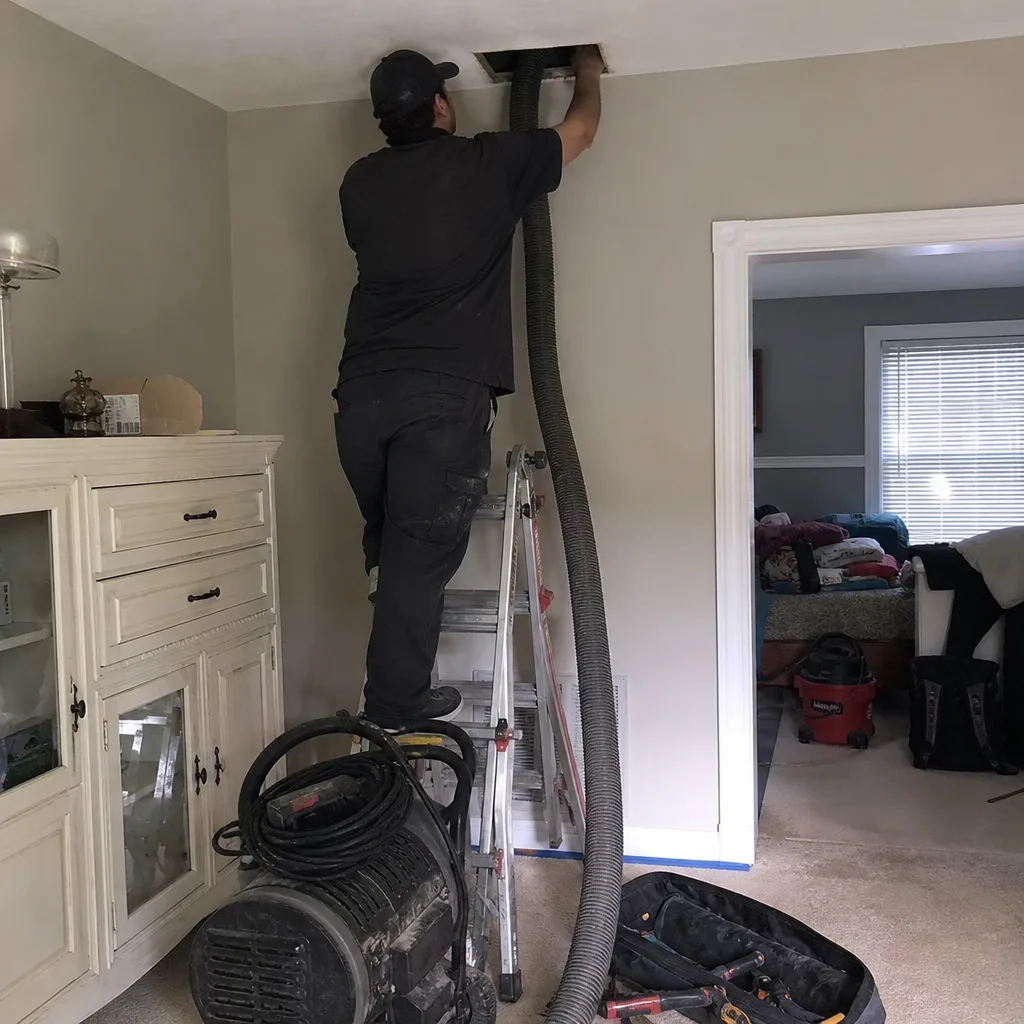 Before
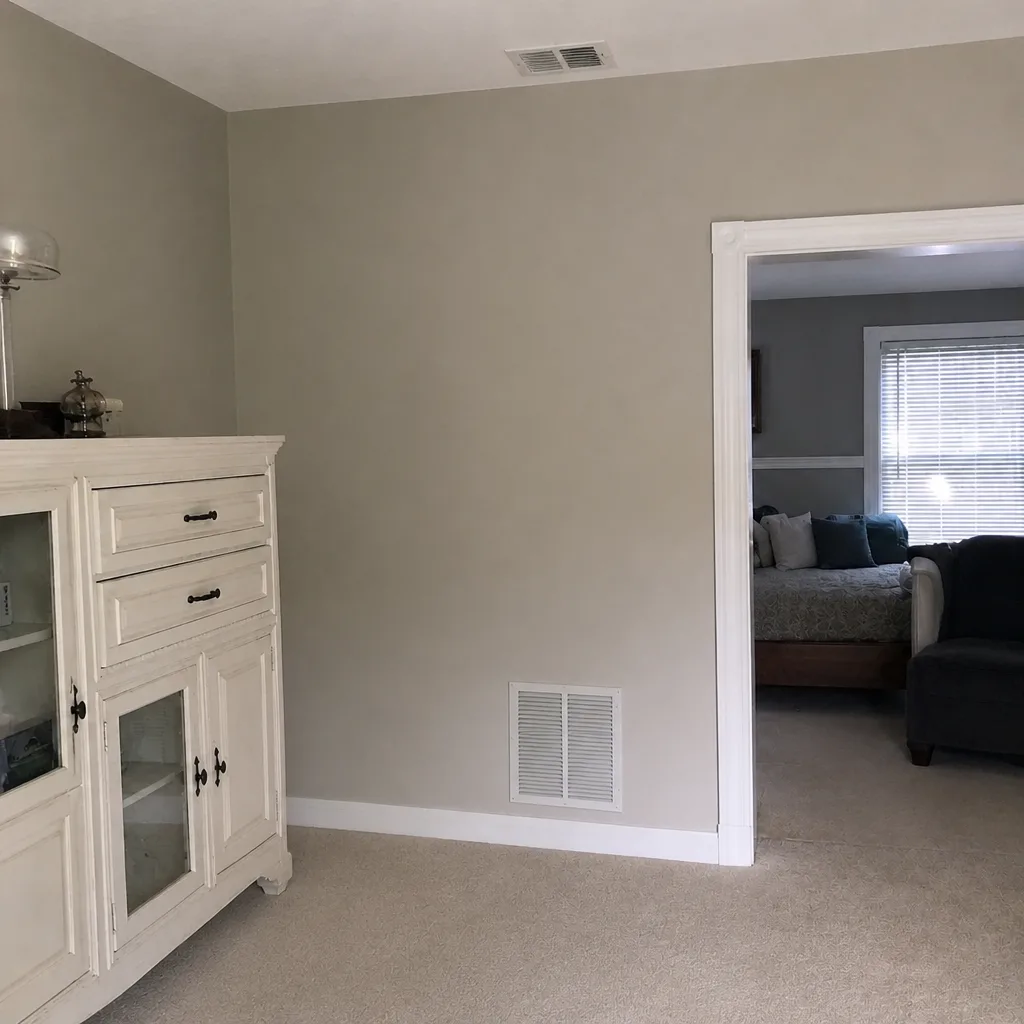 After
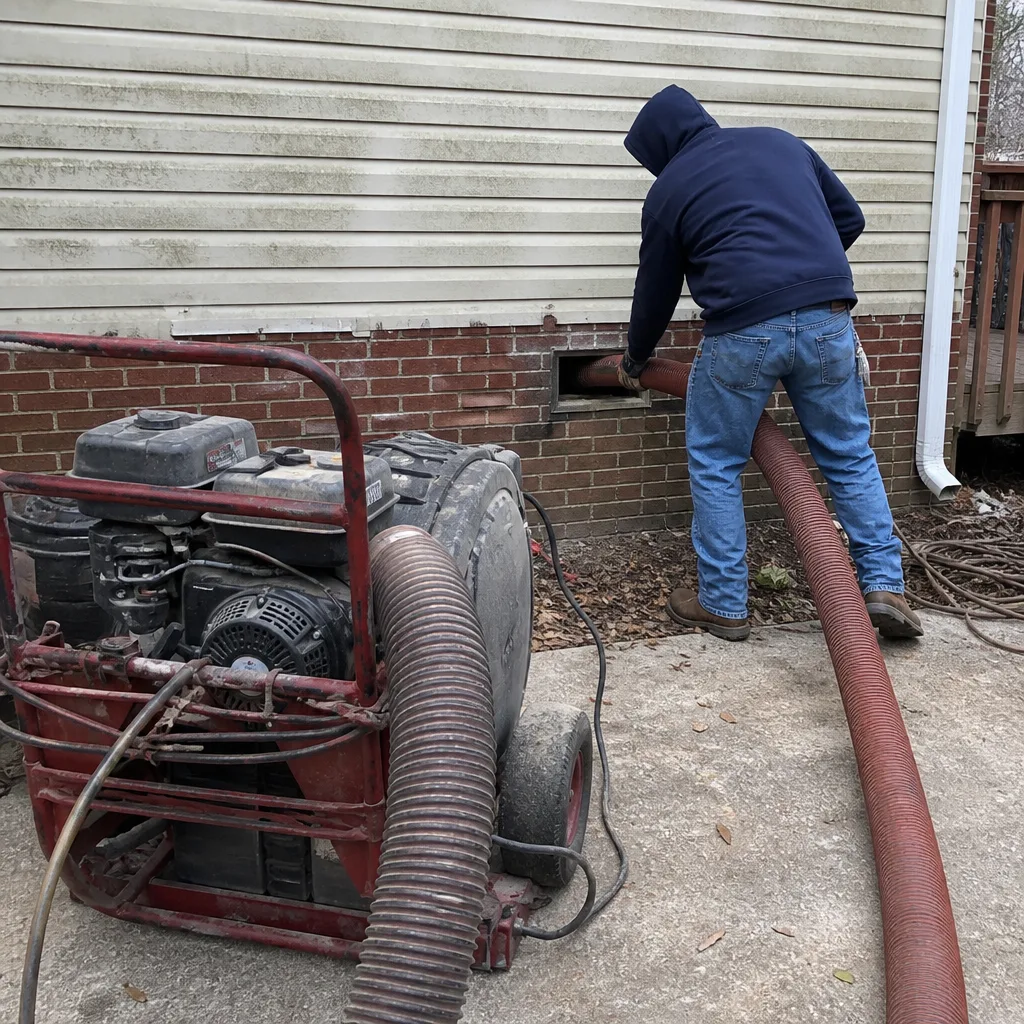 Before
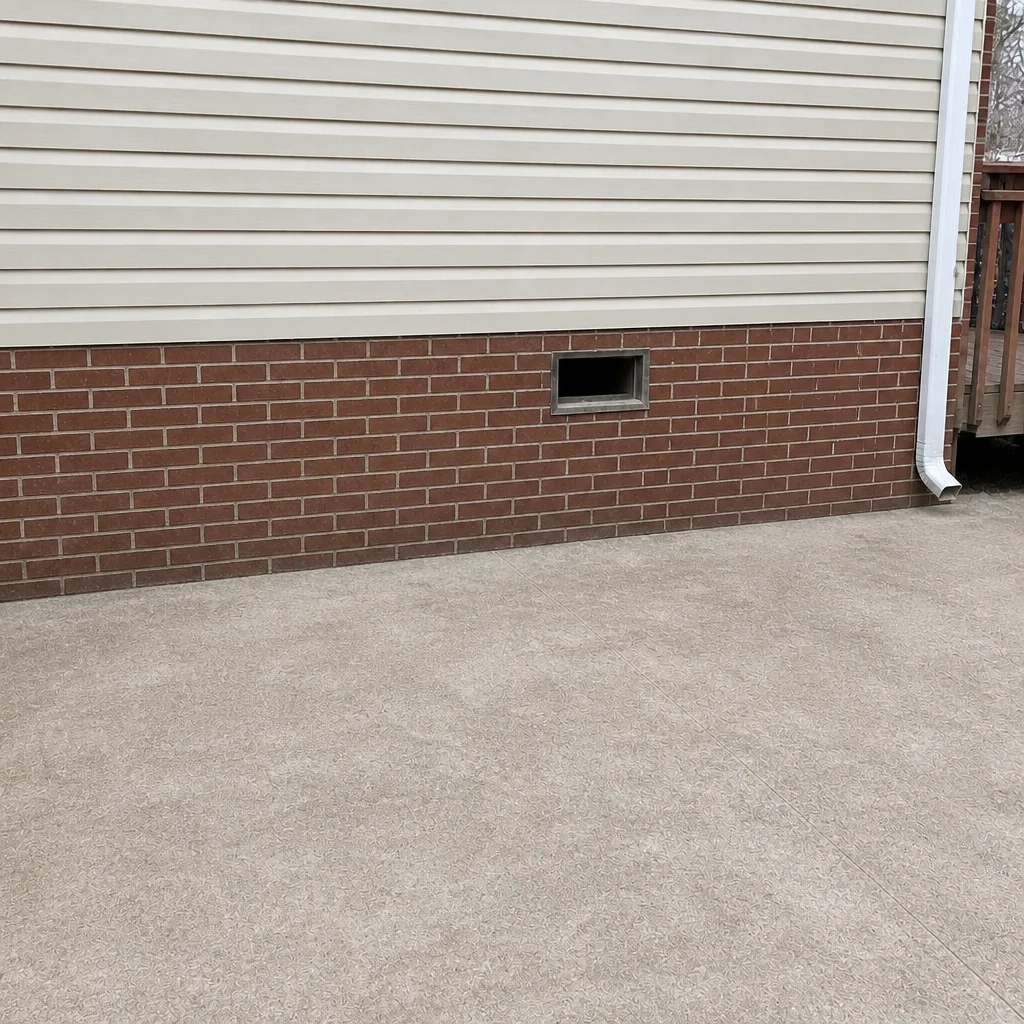 After
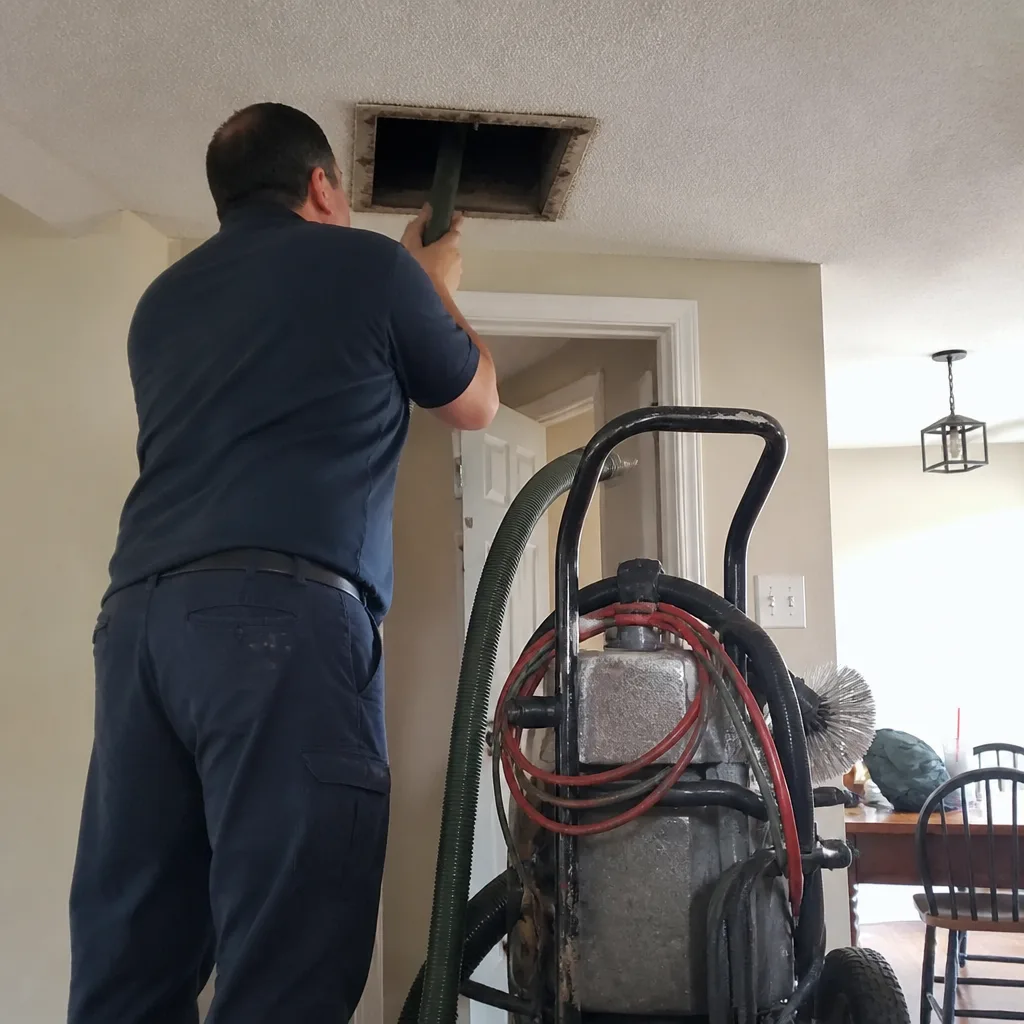 Before
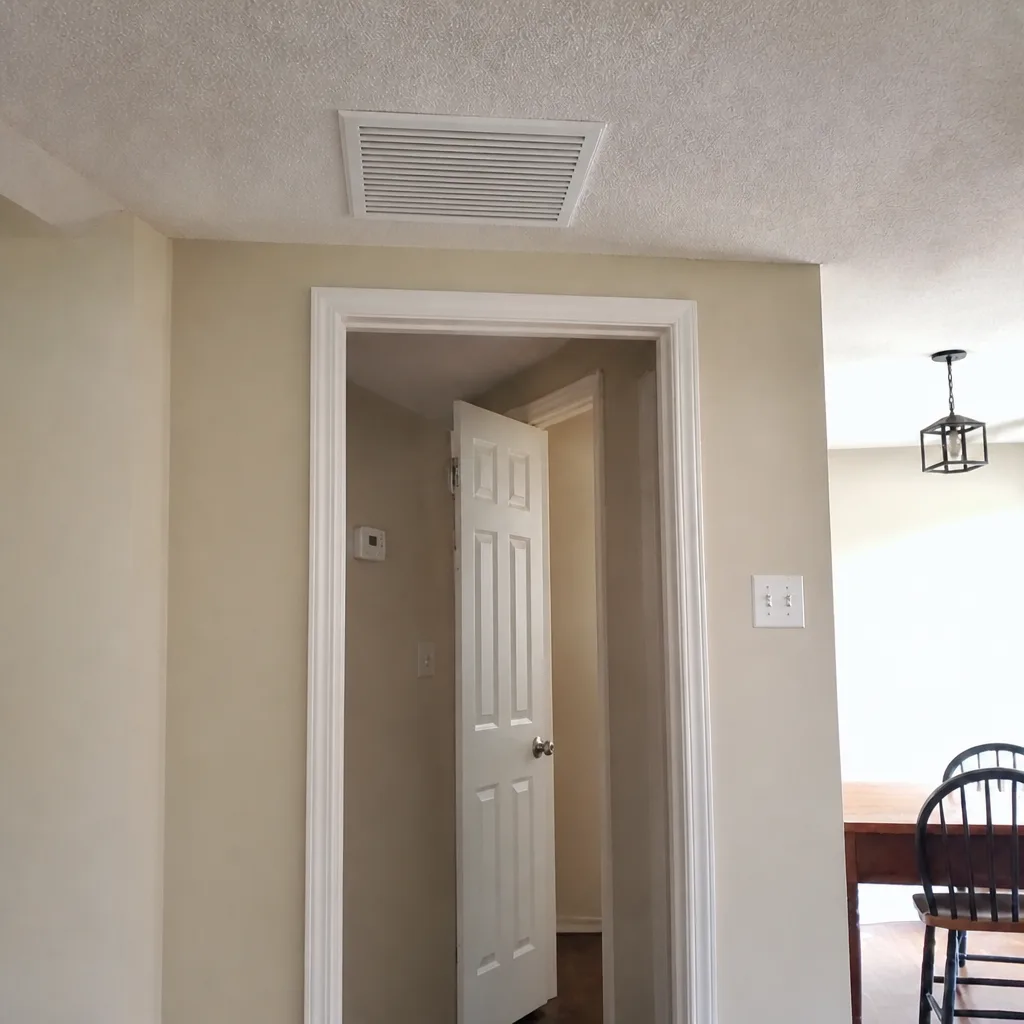 After
Frequently Asked Questions
No, not until the ducts have been inspected and confirmed dry. The system pulls moist, contaminated air from the crawl space through the return ducts and distributes it throughout the house, and running a wet system is one of the most common ways a small flood becomes a whole-house air quality problem. Shut the system off at the thermostat and the breaker before doing anything else. Call (888) 881-9239 for an inspection and free estimate. We answer 24/7.
Post-event duct cleaning in Knoxville is priced per job based on the scope, not per vent. The written estimate sets the final price, and the estimate is free. Beware of very low teaser prices; post-event cleaning requires containment equipment, mechanical agitation against the duct walls, and reporting, and the pricing needs to reflect the scope. The final price is agreed before work starts. Call (888) 881-9239 for an exact quote.
Because they usually aren’t the same job. A low quote is often a supply-side-only vacuum pass with no containment, no return-side cleaning, and no report. That leaves the contaminant source intact and can redistribute what’s in the ducts into the living space. The quote should list containment equipment, both sides of the system, duct repair and sealing where needed, and documentation. If it doesn’t, it’s not the scope a post-flood or post-smoke event needs.
Yes. Fine smoke particulate rides in with infiltration air and deposits on duct walls and register faces, and it can stay on those surfaces long after the outdoor air clears. A filter change handles the air stream but not the duct residue, which is why a musty or smoky smell often lingers. A post-smoke cleaning covers the full air pathway and includes sanitizing where the load was heavy. Call (888) 881-9239 for a free estimate.
Timestamped photos of the waterline, the ducts, the air handler, and each affected register; a video walkthrough of the mechanical space; a written note about the smell; and a contractor’s report with before-and-after photos and airflow readings. Photograph the old filter before replacing it, because saturated filter condition often supports the claim. The report is the part a homeowner can’t produce alone, so ask any contractor for a written summary you can hand to your insurer.
Before-and-after photos of your own ducts, and a written report that describes the scope and the results. Post-event cleaning involves real equipment on-site, including high-efficiency filtration during the job, so the photos and the report are the standard proof. Ask for them before the technician leaves. Call (888) 881-9239 to schedule and to see what our post-event reporting includes. We answer 24/7.
The Bottom Line
The first 24 hours after a flood, storm outage, or smoke event decide whether your duct system becomes a contamination source or stays under control. Shut down before you run the system. Photograph before you move anything. Inspect the filter and ducts before restoring power. Build an HVAC emergency card while the weather is calm. And when the event calls for a professional visit, hire for the full air pathway, containment equipment, and a written report. That’s the scope that protects the house. When you’re ready, Knoxville Air Duct Cleaning Co offers free estimates and can walk you through what your specific system needs. Call (888) 881-9239 for a free estimate. We answer 24/7. Fast dispatch from 7am to 7pm, Sunday through Friday.
Written by the team at Knoxville Air Duct Cleaning Co.