
Rotobrush Air Duct Cleaning in Knoxville: A Homeowner’s Guide
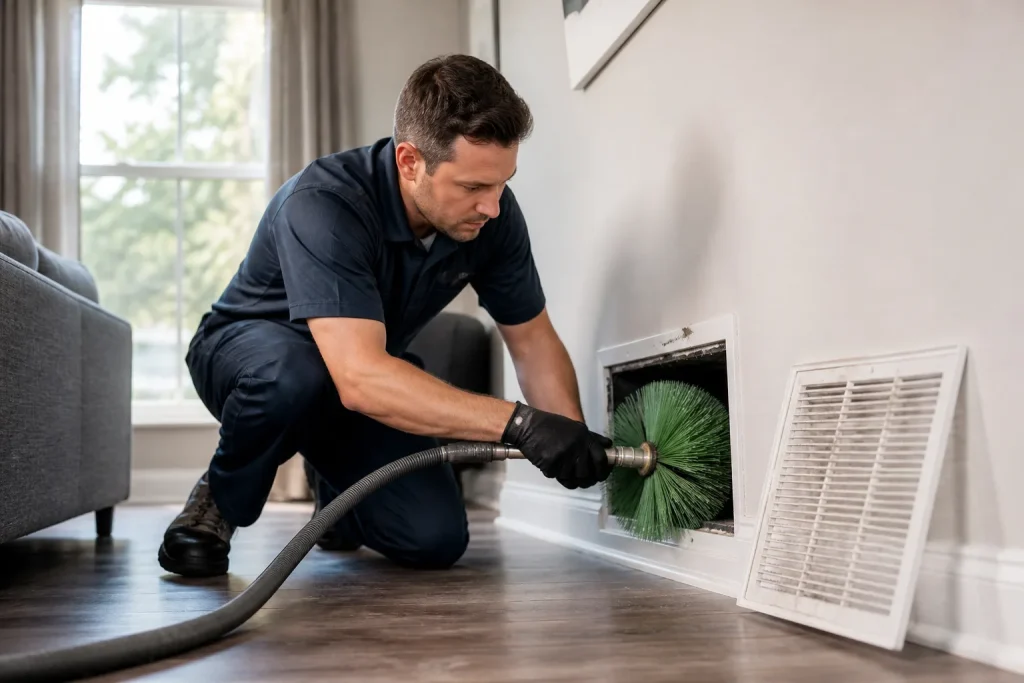
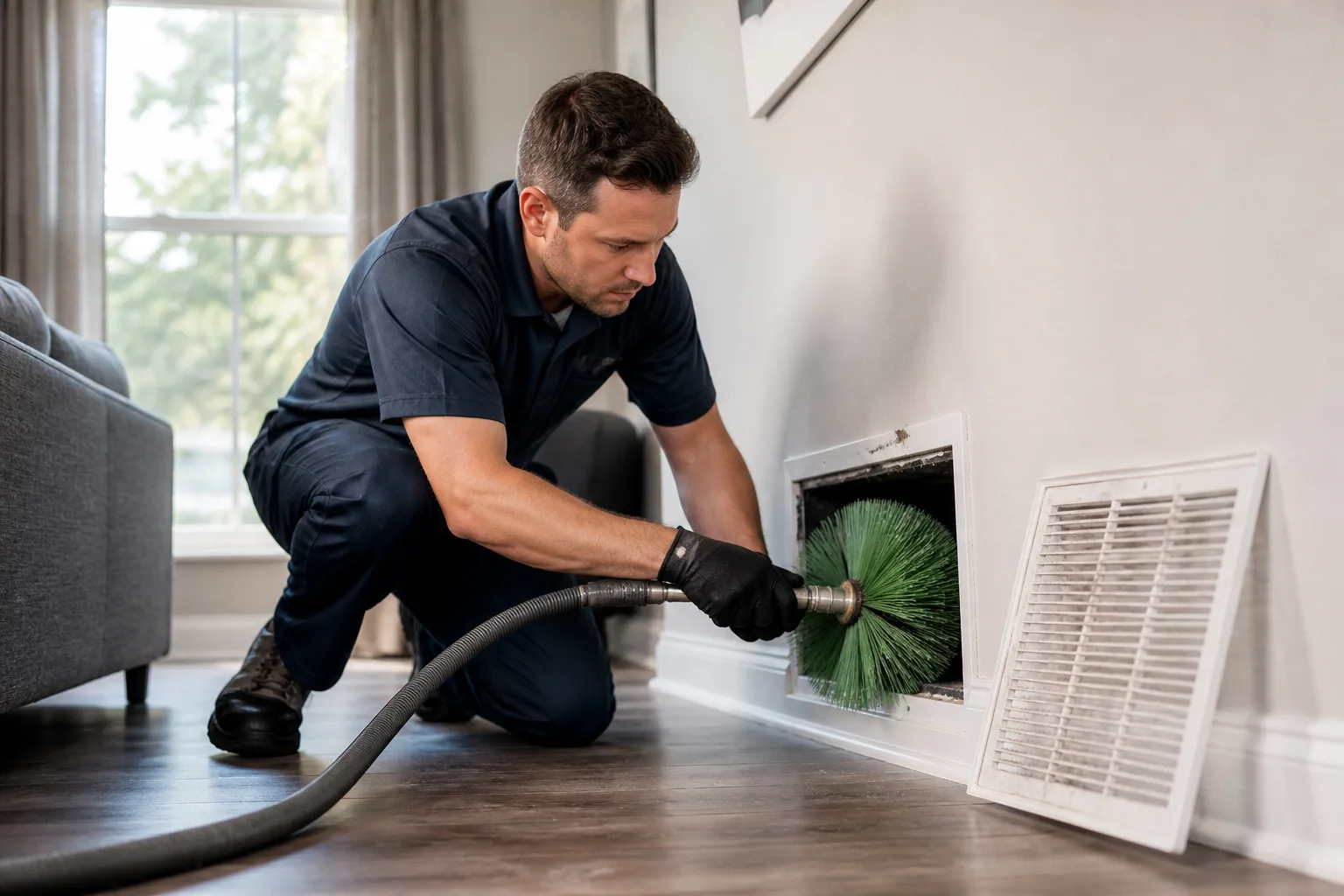
Rotobrush duct cleaning is a contact method: a rotating brush whips debris loose inside the duct while a vacuum pulls it out at the same time. It’s genuinely effective on rigid sheet metal with heavy buildup. It’s also frequently sold as the only “real” way to clean ducts, which is a sales pitch, not a technical position. The right method in Knoxville depends on your duct material, the age of the system, and what’s actually growing in there.
If you’d rather not sort that out alone, call (888) 881-9239. We answer 24/7. Fast dispatch from 7am to 7pm, Sunday through Friday.
How does Rotobrush actually work?
Rotobrush works on two actions happening at once: agitation and extraction. A flexible rotary brush or air whip travels down the duct run, knocking caked debris off the walls. A high-powered vacuum connected to the same system captures what the brush frees before it settles back down. Neither half works well alone. Brush without enough vacuum just moves the mess around. Vacuum without contact leaves the bonded layer stuck to the metal.
That combination is why Rotobrush equipment handles certain jobs that negative-air-only setups struggle with:
- Caked-on debris that’s bonded to the duct wall and won’t lift from airflow alone.
- Rigid sheet metal runs, where a brush can travel the full length without deforming anything.
- Older systems with years of settled dust and construction residue layered into the seams.
What most homeowners don’t hear is that this same contact action behaves differently depending on what the duct is made of. That’s the part worth understanding before anyone quotes you a Rotobrush job in Knoxville.
Where Rotobrush excels in Knoxville homes
Rigid sheet metal ductwork is where the rotary brush method earns its reputation. Knoxville has plenty of older homes with galvanized or sheet metal runs, and those systems accumulate exactly the kind of contamination Rotobrush is built for. Debris bonds to the metal over time. Negative air pressure alone can loosen the top layer but leaves the rest stuck.
The brush changes that. Contact against the duct wall breaks the bond, and the vacuum catches the material as it releases. On heavy accumulation in sheet metal, that’s a real advantage over vacuum-only cleaning.
We’ve seen the difference on systems that sat through a renovation. Drywall dust and sawdust settle into the horizontal runs and pack down. Negative air pulls at the surface; a brush reaches the layer underneath. When a Knoxville home has had work done and the homeowner can’t explain the gritty smell afterward, this method is often the answer. The same applies to older systems where the return side has never been touched.
One honest caveat: the method is only as good as the technician running it. Brush pressure, travel speed, and vacuum setup all change the result. A company using air duct cleaning equipment without the training to match is still a company that will leave debris behind.
Where Rotobrush is a poor fit: flex duct in Knoxville homes
Flex duct is common in newer Knoxville construction and in additions or retrofits where rigid metal wasn’t practical. It’s also where aggressive contact brushing can cause a problem. Flex duct has a thin inner liner, and a spinning brush at the wrong pressure can fray or tear it. Once that liner is compromised, the duct collects debris faster than before and can’t be cleaned back to a sound state.
This is the part generic marketing skips. On flex runs, an experienced technician adjusts technique or switches to a different approach entirely. Sometimes that means lower brush pressure on a short section. Sometimes it means negative air with controlled agitation instead of a full rotary pass. Sometimes it means leaving a damaged run alone and recommending it be replaced rather than “cleaned.”
If a company promises a full Rotobrush treatment on every run without looking first, ask them how they’ll protect the flex. Their answer tells you more than the brochure does. In our experience, the technicians who can explain that distinction are the ones worth hiring. Our technicians have up to 10 years of experience, and that kind of judgment is what that time builds.
How a technician should choose the method
Method choice should follow an inspection, not a sales preference. Before anyone starts, the technician should assess a few things about your system:
- Duct material per run. Sheet metal and flex usually coexist in the same house. Each needs a different approach.
- Contamination type. Loose dust, bonded buildup, microbial growth, and construction residue each respond differently.
- System condition. Torn liner, disconnected joints, and crushed runs change what cleaning can actually accomplish.
- Access points. Return plenum, air handler, and coil access determine how much of the system can be reached.
Only after that should the technician pick a method: rotary brush, negative air, or a combined approach. A legitimate job in Knoxville often uses both. Rotobrush for heavy sheet metal runs, controlled negative air for the flex and the return side. The method serves the system, not the other way around.
Containment matters too. We run Abatement Technologies filtration equipment on site during service, which keeps loosened debris from migrating into living space while the work is underway. That’s a remediation-level standard, and it’s the piece most homeowners never think to ask about.
What a full Rotobrush job should include
Cleaning the visible duct runs is the easy part. A complete job covers the whole air pathway, and that’s where method matters most. Here’s what a legitimate Rotobrush service in Knoxville should include:
- Air handler access and cleaning. The blower and cabinet collect debris that sheets right back into the ducts if left alone.
- Return plenum cleaning. The return side is often the dirtiest part of the system and the most overlooked.
- Register and grille cleaning. Supply and return covers trap dust that re-enters the airstream.
- Before-and-after photos of your own ducts. Any company can tell you it was dirty. Photos show it.
- A method-appropriate finish. Sometimes that means duct sealing to close gaps the brush revealed. Sometimes whole-home filtration with Aprilaire or Honeywell equipment.
A contact-cleaning method like Rotobrush is only as good as the duct system it leaves behind. If the inspection turns up gaps, disconnected joints, or a failing liner, cleaning without sealing is a temporary fix at best. That’s why we treat duct repair and sealing as part of the same arc: clean it, seal it, improve it. The same logic applies to the rest of the air pathway, which is why dryer vent cleaning and HVAC cleaning belong on the same walkthrough rather than on separate visits.
When to call a pro instead of guessing
If you can see visible debris at the registers, smell a musty odor you can’t trace, or you’ve just finished a renovation, the system needs an inspection. The same applies if anyone in the household has allergy symptoms that get worse indoors. Contact brushing on the wrong duct material can make a small problem bigger, so this is not a job for a rented brush and a shop vac.
That’s the moment to call. A proper assessment tells you which method fits your Knoxville home before anyone touches a duct.
The Bottom Line
Rotobrush is a genuinely effective method, and it earns its place on rigid sheet metal with heavy buildup. It’s not universally superior, and it’s a poor fit on flex duct when run without judgment. The right choice follows an inspection of duct material, contamination type, and system condition. A legitimate job covers the air handler, return plenum, and the full pathway, not just the runs you can see.
If you’re in Knoxville and need help, Knoxville Air Duct Cleaning Co offers free estimates. Call (888) 881-9239. We answer 24/7. Fast dispatch from 7am to 7pm, Sunday through Friday. You’ll get one flat price per system agreed before work starts, before-and-after photos of your own ducts, and technicians who can explain which method they’re using and why. Learn more about Knoxville Air Duct Cleaning Co or call for an exact quote. Estimates are free.
Frequently Asked Questions
Neither is universally better. Rotobrush’s contact brush excels on rigid sheet metal with caked-on buildup that negative air alone won’t loosen. Negative air is the safer choice on flex duct, where aggressive brushing can damage the inner liner. A combined approach is common and often the right call in Knoxville homes that mix both duct types.
Yes, if it’s run at the wrong pressure or speed. Flex duct has a thin inner liner that a spinning brush can fray or tear. An experienced technician adjusts technique or switches methods on flex runs. If a company won’t discuss that distinction, ask before you book.
Air handler access and cleaning, return plenum cleaning, register and grille cleaning, and before-and-after photos of your own system. A complete job often extends to duct repair and sealing, whole-home filtration with Aprilaire or Honeywell, or sanitizing with Guardsman when microbial growth is present. Call (888) 881-9239 for a free estimate and we’ll walk through what your system needs.
Ask for before-and-after photos of your own ducts, not stock images. Agree on one flat price per system before work starts so the final invoice matches the quote. A legitimate job shows you the condition of the system on both ends. Call (888) 881-9239 for an exact quote; estimates are free.
Written by the team at Knoxville Air Duct Cleaning Co.
Need Air Duct Cleaning Help?
Call Knoxville Air Duct Cleaning Co - the local pro we connect you with is licensed and insured, here with fast help in Knoxville.
(888) 881-9239