
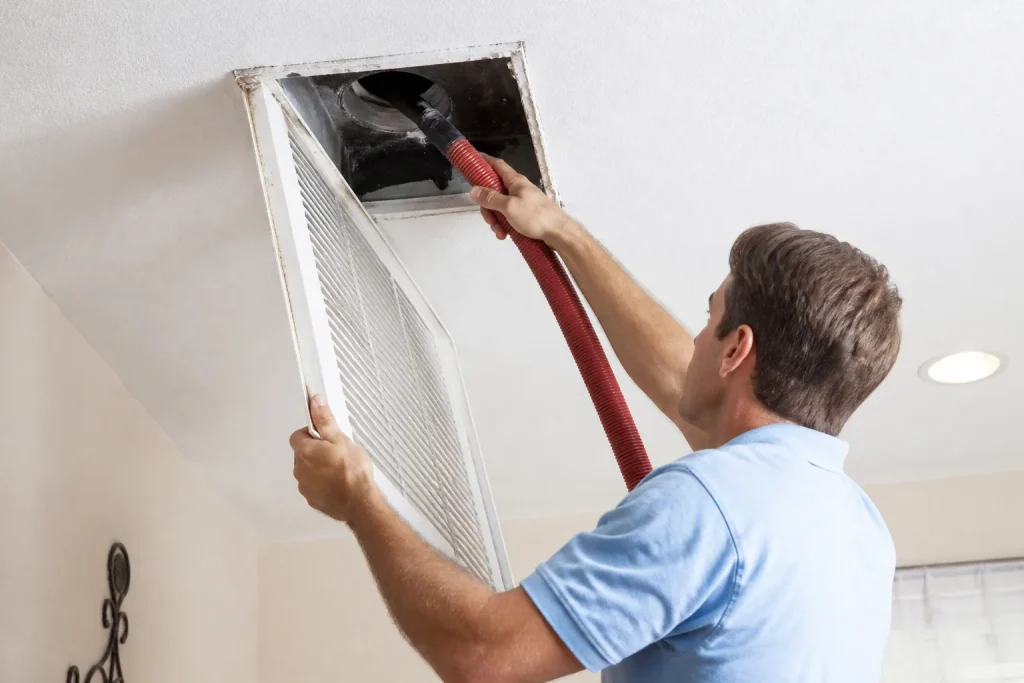
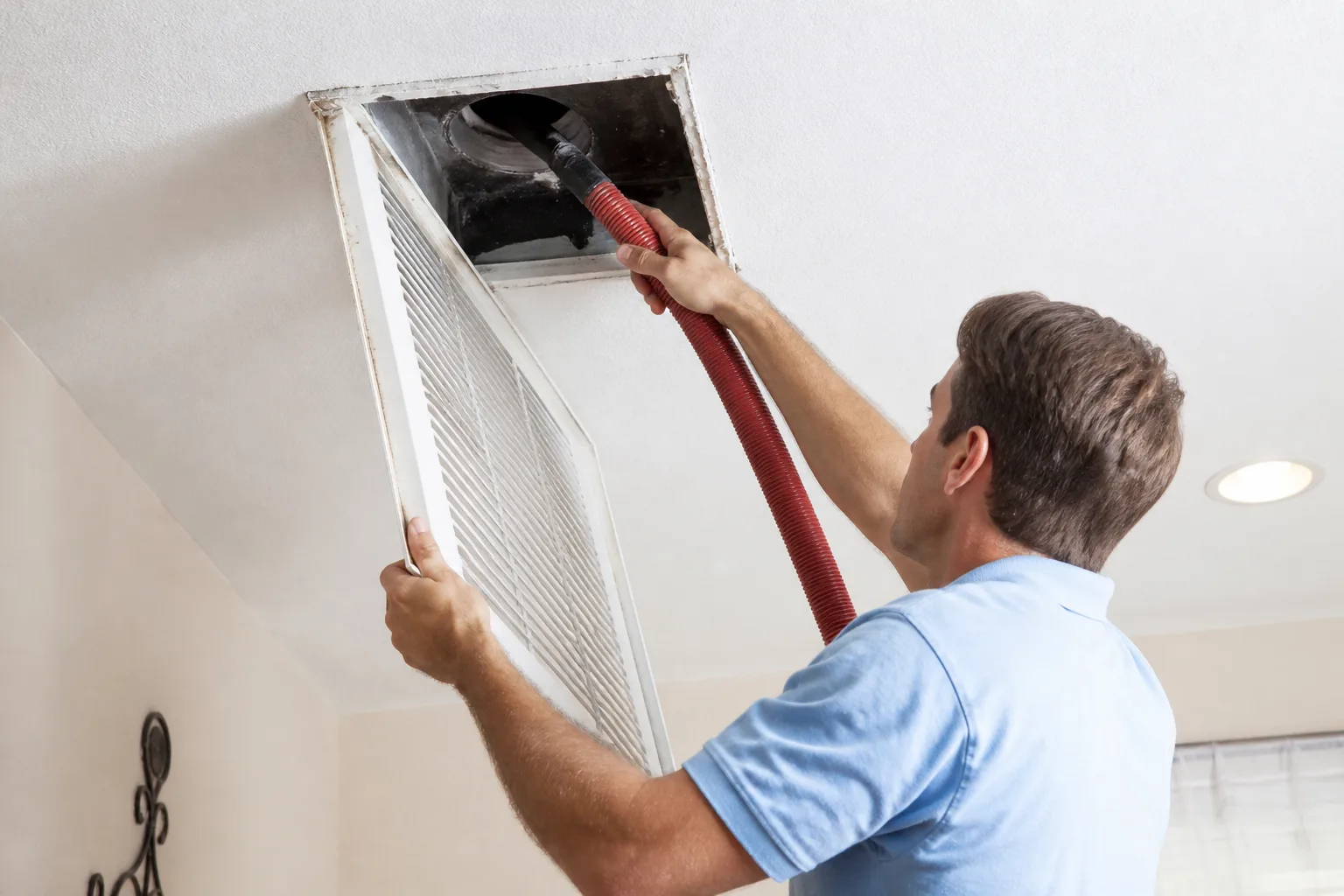
Air Duct Cleaning: Repair or Replace? How Knoxville Homeowners Decide
Most homeowners ask the wrong question first. They want to know whether their ductwork is “old enough” to replace, as if age alone settles it. In our experience across Knoxville, the repair-or-replace call has almost nothing to do with a number on a build date and everything to do with what a physical inspection finds inside the system. The rule of thumb you’ll read online – replace flex duct past a certain age – misses the real distinctions. Some fifteen-year-old flex in a Knoxville crawl space is perfectly serviceable. Some five-year-old duct is already destroyed. Telling the two apart takes a diagnostic look, not a calendar.
This guide walks through how we actually make that decision. If you’d rather skip the crawl space tour and get a straight answer, call (888) 881-9239. We answer 24/7. Fast dispatch from 7am to 7pm, Sunday through Friday.
Key Takeaways
- Duct age is not the deciding factor. Contamination type, structural integrity, and airflow performance are.
- Three conditions make cleaning pointless: inner liner delamination, persistent moisture saturation, and crushed or collapsed sections.
- Sealing and repair extend the life of sound ductwork. They can’t fix structural failure.
- Knoxville homes built between 1975 and 1995 with original flex duct in unconditioned crawl spaces face a different calculus than newer construction.
- A proper inspection report means camera footage, airflow numbers, and static pressure readings – not a sales pitch.
Why duct age alone is a bad way to decide in Knoxville
We hear it constantly: “The ductwork is original to the house, so it probably needs replacing.” Maybe. But Knoxville’s housing stock is varied enough that a single age cutoff doesn’t hold. A 1988 home in a neighborhood off Northshore might have flex runs that have held up beautifully because the crawl space stays dry and the duct was installed with proper support. A 2005 build with a hasty flex install and a damp crawl space might already have sagging, saturated sections.
What actually determines whether ductwork is worth saving comes down to three things:
- Contamination type. Surface dust and debris clean out. Mold growth fed by moisture, or debris bonded to a failing inner liner, does not.
- Structural integrity. Duct that is intact, correctly supported, and sealed can be cleaned and kept. Duct that’s torn, disconnected, or crushed cannot.
- Delivery efficiency. If the layout is leaking badly at every joint or starving distant rooms of airflow, cleaning it perfectly still leaves you with a system that doesn’t work.
The point: an inspection answers the question. A build date doesn’t. That’s why we start with a physical look at the whole air pathway rather than quoting a replacement before anyone’s been under the house.
The three conditions that make cleaning pointless
Cleaning is only worth doing on ductwork that’s structurally sound. When we find any of the following three problems, we’ll tell you plainly that cleaning won’t help – because you’d be paying to sanitize a system that’s already failing. Replacement of the affected section is the honest answer.
1. Inner liner delamination in flex duct
Flex duct has a plastic inner liner that carries the air, insulation around it, and an outer jacket. That inner liner can separate from the insulation over time, especially in hot attics and damp crawl spaces. Once it delaminates, the liner can flap, tear, or shed material into the airstream. You can’t clean a liner that’s coming apart – every pass with a brush makes it worse. This is a replace-the-run situation.
2. Persistent moisture saturation from crawl space exposure
Knoxville’s humidity and older unconditioned crawl spaces are a rough combination for flex duct. When insulation becomes saturated and stays wet, you get a few problems at once: mold growth inside the duct, sagging that restricts airflow, and collapsed sections where the weight of wet insulation pulls the run down. Cleaning wet, moldy duct doesn’t solve the moisture source. The duct itself is compromised and needs to come out.
3. Crushed sections that restrict airflow regardless of cleanliness
A crushed duct can be spotless inside and still useless. If a run is pinched under a joist, kinked at a sharp bend, or flattened by stored items in the crawl space, no amount of cleaning restores the airflow. Static pressure readings will show the restriction. The fix is replacing that section, not cleaning it.
What sealing and repair can fix – and what they can’t
This is where a lot of Knoxville homeowners get oversold in one direction or the other. Sealing and repair are genuinely valuable, and they extend the life of sound ductwork considerably. But they have a ceiling.
What repair and sealing handle well
- Leaky connections and joints. Mastic sealing at boots, plenums, and joints closes gaps that bleed conditioned air into a crawl space or attic. For major leakage across a whole system, an aerosol-based sealant applied from inside the duct can seal thousands of pinholes and small gaps without opening walls.
- Minor disconnects. A run that’s popped loose at a boot or plenum can be reconnected and sealed properly.
- Small tears in the outer jacket. Patching the jacket restores the insulation barrier.
What repair and sealing cannot do
- Restore a delaminated inner liner.
- Dry out saturated insulation that’s already growing mold.
- Un-crush a section that’s structurally collapsed – that’s a section replacement, not a seal.
- Fix a layout that was sized wrong from the start.
The practical rule: sealing closes gaps in sound ductwork. It doesn’t rebuild ductwork that’s failed. Once you’ve cleaned and sealed, that’s the moment to consider whole-home filtration upgrades – Aprilaire and Honeywell systems, for instance – so the cleaned system stays cleaner and the air your family breathes is filtered at the source.
How to read a duct inspection report
If a company hands you a quote for replacement without showing you anything but a price, ask questions. A real diagnostic inspection produces evidence, and that evidence is what should drive the repair-or-replace call. Here’s what to look for.
- Camera footage. A camera run through the duct shows what’s actually inside – liner condition, moisture, debris type, and any crushed or disconnected sections. You should be shown the footage, not just told about it.
- Airflow measurements. Readings at the registers tell you which runs are delivering and which are starved. If one side of the house is weak, the report should show it and explain why.
- Static pressure readings. This is the number most homeowners never see, and it’s the most diagnostic. High static pressure means the system is fighting a restriction – a crushed run, an undersized return, a dirty coil, or leaking duct. It separates “dirty” from “structurally restricted.”
- A section-by-section verdict. The report should say specifically which runs are cleanable, which need repair or sealing, and which need replacement. A blanket “replace the whole system” without section detail is a red flag.
In our experience, the honest answer is often mixed: most of the system is cleanable, a couple of runs need replacing, and the joints need sealing. That’s a very different price than full replacement, and a proper report makes the difference visible.
The Knoxville construction context that changes the math
Where and when your Knoxville home was built matters more than most homeowners realize. Homes built between roughly 1975 and 1995 often have original flex duct routed through unconditioned crawl spaces, and that combination creates a particular set of failure modes: moisture infiltration from the crawl space, sagging runs with inadequate support, and liner wear from decades of hot summers and humid air. If that’s your house, the inspection is doing real work – and the answer may genuinely be section-by-section replacement rather than cleaning.
Newer construction with sealed, insulated runs in conditioned or well-sealed spaces typically holds up much better. Duct in those homes is more likely to be cleanable and worth sealing rather than replacing. The build era doesn’t decide it for you, but it tells you what to look for.
Cost comparison: cleaning vs. repair vs. replacement
Here’s the framework we use, and the one that lets you evaluate return on investment against the remaining life of the HVAC system itself. Exact pricing depends on your home, the number of runs, and what the inspection finds, but these are the categories to weigh.
- Cleaning and sanitizing. Suitable when ductwork is structurally sound. The lowest-cost option and the right starting point when the inspection says the duct is saveable.
- Cleaning plus sealing and repair. Adds real value when the system leaks or has minor disconnects. Closes gaps that waste conditioned air and pull crawl-space air into the home.
- Partial section replacement. The right call when a few runs have failed (delamination, crush, saturation) but most of the system is sound. Usually far less than full replacement and often the best ROI.
- Full system replacement. Warranted only when the majority of runs have failed or the layout is fundamentally wrong. This is a significant expense, and it should only follow a report that shows exactly why the whole system needs to go.
One more thing to weigh: how much life is left in the HVAC equipment itself. If the system has years of service ahead, investing in the ductwork makes sense because the ducts outlast the equipment. If the HVAC system is near the end of its life, it’s worth talking through the whole picture before committing to a full duct replacement – sometimes the smarter sequence is to handle what’s failing now and plan the rest alongside the equipment decision. That’s a conversation, not a single-number quote. Estimates are free, and the price is set per job by the written estimate.
When to call a pro
Some things are worth checking yourself: a visual look in the crawl space for obvious crushed runs or wet insulation, and noting which rooms feel weak on airflow. But liner delamination, moisture saturation, and static pressure evaluation are not things you can diagnose with a flashlight. If you’ve found wet insulation, seen mold inside a register, noticed a musty smell that won’t go away, or had one company quote a full replacement with no footage to back it up, get an independent inspection. A trained technician has the equipment – Rotobrush and Nikro cleaning systems, Abatement Technologies filtration for containment during service – to see the whole air pathway, not just the part you can reach.
Related services in Knoxville: if the inspection points to cleaning or repair, our air duct cleaning and HVAC cleaning services cover the full system, and dryer vent cleaning is worth doing at the same time if lint has built up in a run that shares the crawl space. Our team at Knoxville Air Duct Cleaning Co handles the whole air pathway, so you’re not coordinating three companies to fix one system.
The Bottom Line
The repair-or-replace decision for Knoxville ductwork comes down to three findings: whether the duct is structurally sound, whether it’s dry and free of contamination that can’t be cleaned, and whether it’s delivering conditioned air efficiently. Age is a starting clue, not the answer. Replace the runs that have failed – delaminated, saturated, or crushed. Clean and seal the rest. Don’t pay to clean ductwork that’s already beyond saving, and don’t pay to replace ductwork that’s simply due for a cleaning.
If you’re in Knoxville and need help, Knoxville Air Duct Cleaning Co offers free estimates – call (888) 881-9239. We answer 24/7. Fast dispatch from 7am to 7pm, Sunday through Friday. We’ll show you what we find and give you a clear section-by-section recommendation so you can decide with evidence instead of guesswork.
Frequently Asked Questions
No. Age alone doesn’t require replacement. Many older Knoxville homes have ductwork that’s perfectly cleanable and worth saving. The decision depends on an inspection of the duct’s condition – whether the inner liner is intact, whether there’s moisture saturation or mold, and whether any runs are crushed or disconnected. A duct that’s old but sound can be cleaned and sealed and serve for years more.
Cleaning alone rarely fixes mold, because mold means moisture is getting in. A sanitizing treatment – we use Guardsman – addresses microbial contamination on surfaces, but if the duct is saturated from a damp crawl space or a leak, cleaning and sanitizing without solving the moisture source is a temporary fix. In that case, the affected runs usually need to be replaced. Call (888) 881-9239 for an inspection; the estimate is free.
Repair and sealing are almost always cheaper than replacement when the duct is structurally sound. A common honest outcome in Knoxville homes is partial replacement: a few failed runs replaced, the rest cleaned and sealed. That’s considerably less than full system replacement. The right comparison is against the remaining life of your HVAC equipment – call (888) 881-9239 and we’ll walk you through the numbers for your specific home.
Leaking and dirty look different in a proper inspection. Dirty means debris and dust buildup that cleaning removes. Leaking shows up as gaps at joints and boots, and as elevated static pressure readings that indicate the system is losing or struggling to move air. Airflow measurements at each register help isolate where the problem is. A report that shows the numbers and the footage tells you which you’re dealing with – call (888) 881-9239 to schedule an inspection.
Written by the team at Knoxville Air Duct Cleaning Co.
Need Air Duct Cleaning Help?
Call Knoxville Air Duct Cleaning Co - the local pro we connect you with is licensed and insured, here with fast help in Knoxville.
(888) 881-9239